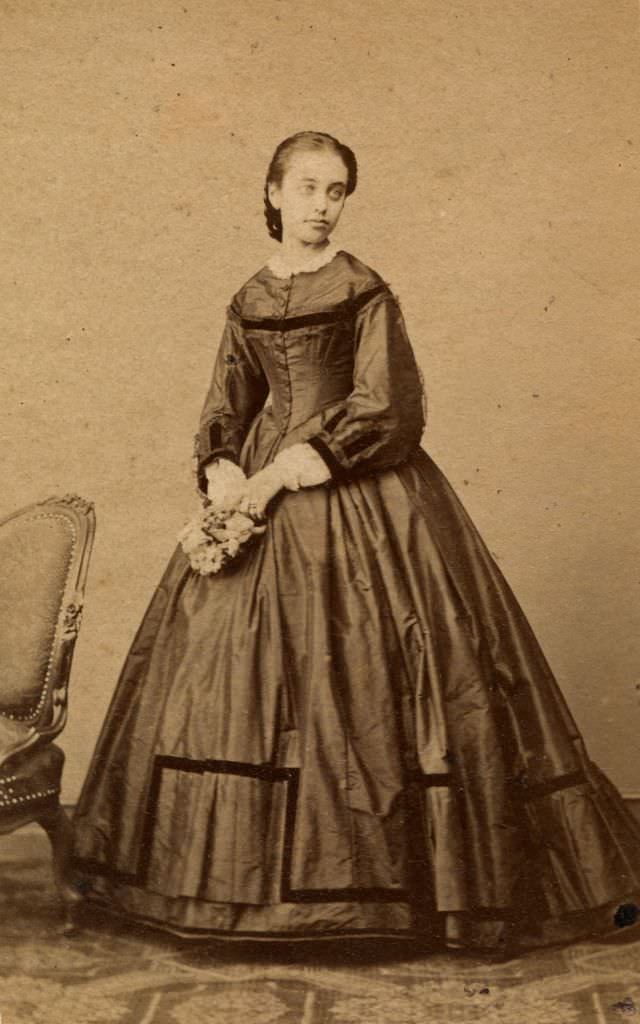
Poised in a studio setting, a young Victorian girl stands beside an upholstered chair, her gaze turned slightly away as if caught between instruction and daydream. The plain backdrop pulls attention to her silhouette and posture, while the careful staging hints at the formality of mid-19th-century portrait photography. Even without a named sitter or printed location, the scene reads as a quiet record of how families chose to present youth, respectability, and refinement.
Her 1860s dress is the true centerpiece: a fitted bodice with long sleeves, a crisp white collar, and dark velvet-like bands that emphasize the structured lines of the garment. The full, bell-shaped skirt spreads outward in the era’s fashionable volume, likely supported by layers beneath, and finished with horizontal trim that adds weight and rhythm to the fabric. A small bouquet held at the waist softens the severity of the tailored look, balancing decorum with a touch of sentiment.
Details like these make the photograph valuable for anyone researching Victorian girls fashion, 1860s clothing, or the broader culture of dress and domestic ideals. The combination of sober color tones, modest neckline, and disciplined tailoring suggests expectations about age, femininity, and social standing, expressed through textiles as much as through expression. Seen today, the portrait offers more than style inspiration—it preserves a moment when fashion served as a language of upbringing and identity.