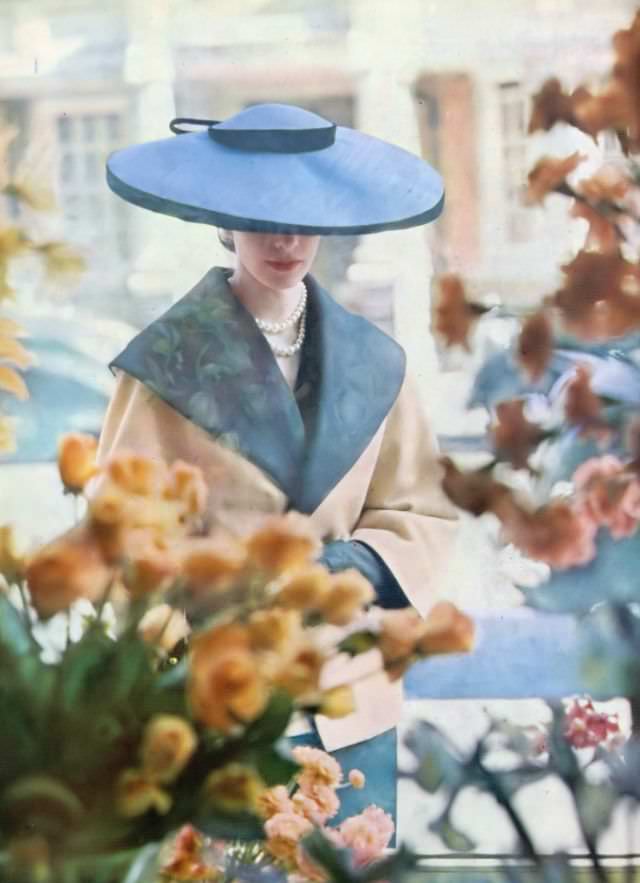
Beneath the dramatic sweep of a blue shantung cartwheel hat by R.M.Hats, a poised model turns slightly away from the viewer, her face shaded by the wide brim in a gesture that feels both guarded and glamorous. The hat’s crisp disc shape, finished with a small crown and subtle trim, becomes the unmistakable focal point—an emblem of early-1950s millinery when silhouette and presence mattered as much as fabric. A strand of pearls at the throat and a structured coat with a broad, dark collar complete the controlled elegance associated with Harper’s Bazaar UK in July 1951.
Soft color and gentle blur lend the scene a painterly quality, as if the fashion moment is being glimpsed through a window or across a garden. Flowers crowd the foreground, their warm tones contrasting with the cool blue of the hat and skirt, while the background architecture and street details dissolve into an urbane hush. That layering—floral bokeh, composed figure, then city beyond—creates depth and atmosphere, turning editorial styling into a small narrative of public refinement.
Editorial fashion photography of this period often balanced clarity of design with an almost cinematic restraint, and the image leans into that tradition by letting the hat’s geometry command the frame. The choice of shantung, prized for its texture and body, reads beautifully at scale, reinforcing the “cartwheel” profile that defined statement headwear in postwar fashion culture. For collectors, researchers, and vintage style enthusiasts, the photograph offers a rich reference point for 1950s British magazine fashion—where millinery, pearls, and immaculate tailoring combined to signal modern sophistication.