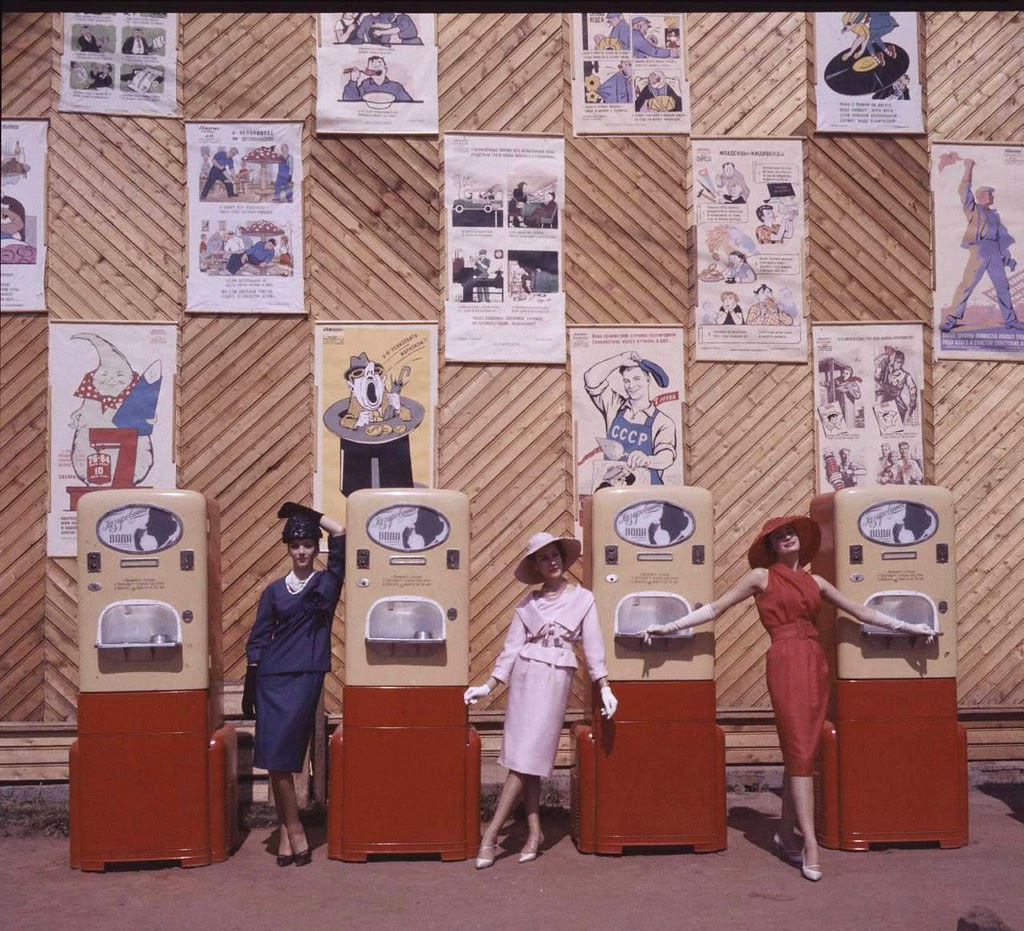
Sunlit and theatrical, the scene stages couture as a kind of street performance: three impeccably dressed women pose with practiced ease beside a row of chunky, red-and-cream vending machines. Their fitted dresses, gloves, and wide-brimmed hats read as unmistakably Parisian, while the crisp color palette makes the moment feel startlingly modern for a Soviet streetscape. The camera lingers on posture and silhouette, turning everyday pavement into an improvised runway.
Behind them, a wall of posted cartoons and public graphics—many with Cyrillic lettering—anchors the image in its Cold War setting and hints at the constant presence of ideology in public life. That contrast is the real spark of the photograph: luxury lines and tailored restraint set against a backdrop designed for instruction and mass messaging. Even the vending machines become props in a cultural collision, suggesting consumer curiosity meeting a system built on different assumptions about desire and display.
For anyone searching “Dior Moscow 1959” or exploring how fashion and culture intersected across the Iron Curtain, this photo offers a vivid, shareable doorway into the era. It evokes the shock of Western haute couture appearing in a space where style was often expected to be practical, collective, and discreet. More than a snapshot of clothing, it’s a record of how soft power traveled—through fabric, attitude, and the simple act of being seen.