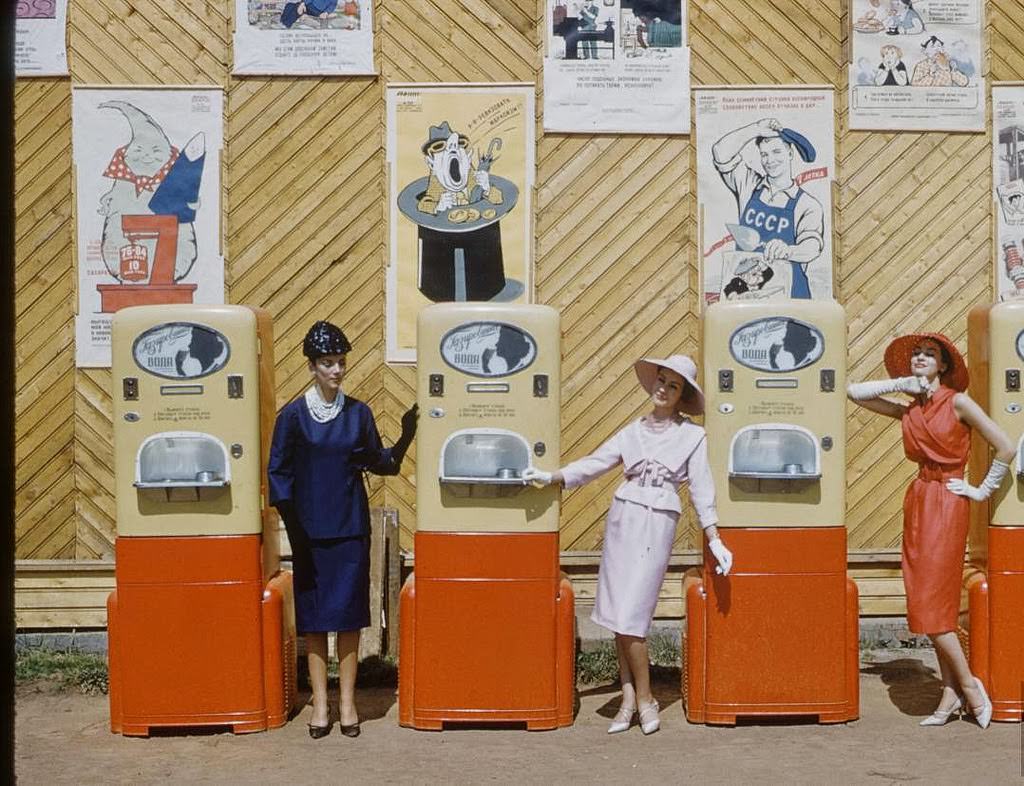
Parisian poise meets Soviet practicality in this striking 1959 scene, where Dior-clad models pose like a traveling theater troupe against a wall of bold public posters. Their tailored silhouettes—gloves, hats, and cinched waists—turn an everyday streetscape into an impromptu runway, inviting passersby to compare couture polish with the familiar visual language of propaganda and public messaging.
Three women stand spaced between chunky, brightly painted street machines, using them as props the way a fashion house might use a salon chair or mirrored screen. The contrast is the point: refined fabrics and careful posture set against utilitarian hardware, with the backdrop’s graphics amplifying the sense of performance and spectacle. Even without identifying a precise street corner, the image communicates a jolt of cultural contact—an exported idea of elegance staged in the most ordinary of settings.
Moscow’s “fashion shock” wasn’t only about hemlines or handbags; it was about what clothing could signify when worlds collided during the Cold War. Viewed today, the photograph reads as both style documentary and social history, capturing how Western high fashion briefly occupied Soviet public space and sparked curiosity, debate, and desire. For anyone searching the story of Dior in Moscow, 1959 fashion culture, or the visual politics of everyday life, this image offers a vivid doorway into that moment.