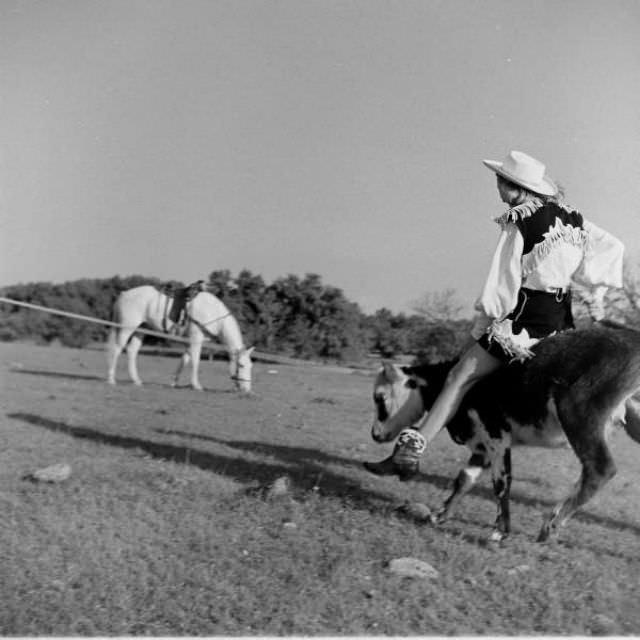
Wind and open pasture set the tone as a young rider moves across the grass on a sturdy mount, framed by a distant saddled horse and a low line of trees. The scene feels far from a studio backlot—more like everyday ranch country—where animals graze, gear is kept close, and the horizon does most of the talking. In that quiet space, “cowgirl” reads less as a costume and more as a practical identity shaped by work, weather, and wide land.
Fringe swings from a fitted Western outfit, and the broad-brimmed hat does its job against sun and dust, reminding us how 1940s American cowgirl fashion blended utility with showmanship. Sturdy boots and a confident seat echo the demands of riding, while decorative details hint at rodeo culture and the popular Western look that spilled into mainstream style. It’s a snapshot of clothing designed to be seen, yes—but also to hold up under movement, saddle leather, and long hours outside.
Beyond the silver screen, the authentic life suggested here is one of skill and routine: handling animals, keeping balance, and navigating rough ground with ease. The image invites a closer look at mid-century Western heritage—how cowgirl culture intersected with entertainment, yet remained rooted in real landscapes and real labor. For readers searching for 1940s cowgirl aesthetics, Western fashion history, and the lived culture behind the myth, this moment offers a grounded starting point.