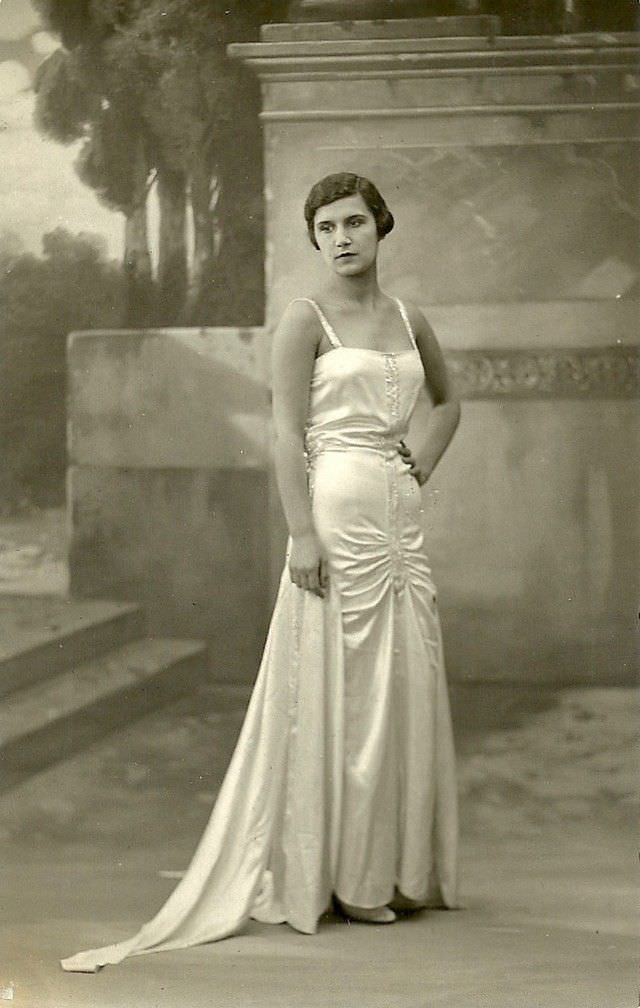
Poised before a monumental stone backdrop, Miss Greece Aliki Diplaraku stands with a calm, assured gaze that reads as both modern and unmistakably of her era. Her satin evening gown—sleek through the bodice, gathered at the hip, and trailing into a long train—catches the light in soft highlights, emphasizing the smooth, liquid sheen of the fabric. A short, neatly waved hairstyle frames her face, while her hand-on-hip stance signals the practiced confidence of a pageant winner.
Behind her, the setting suggests a formal terrace or civic garden, where broad steps and carved masonry lend a sense of ceremony without distracting from the figure at center. The photograph’s gentle focus and tonal range, typical of early 20th-century portraiture, soften edges and create a romantic atmosphere. Even the faint silhouettes of trees in the distance contribute to the scene’s balance, hinting at an outdoor elegance that complements the dress’s dramatic length.
As part of the wider fascination with “Miss Europe” beauty culture, this portrait of Diplaraku reflects a moment when fashion, celebrity, and national representation converged in popular media. The styling favors streamlined glamour over heavy ornament, echoing a shift toward simpler lines and a more athletic, self-possessed feminine ideal. For viewers interested in 1930s fashion and culture, it offers a vivid glimpse of pageant-era sophistication—where a single pose, a polished gown, and a dignified setting could define an international winner.