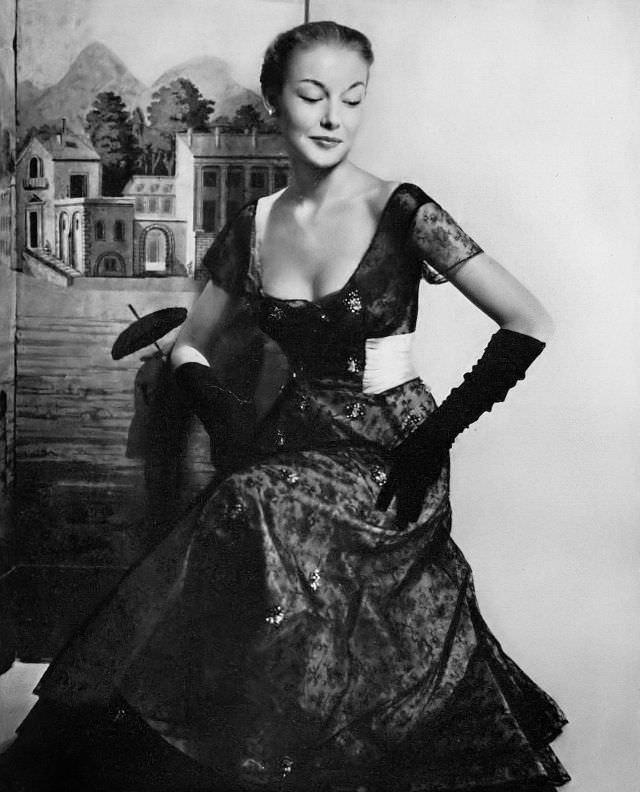
Poised in three-quarter profile, Liz Pringle turns her face downward with the serene confidence of a mid-century fashion muse, one gloved arm set at the waist as the skirt swirls into motion. The studio backdrop evokes a romantic Old World streetscape—arched façades and distant hills—giving the scene a travel-poster glamour that Harper’s Bazaar loved to pair with couture elegance. Even in monochrome, the photograph emphasizes sheen, shadow, and texture, letting the gown’s surface catch the light like a promise of color.
The October 1948 styling centers on a pink silk taffeta dress traced with black lace and pinpointed with rhinestone clusters, details that would have glittered subtly under magazine lights. A wide satin sash cinches the waist, sharpening the hourglass silhouette that defined postwar eveningwear, while the short lace sleeves and long gloves create a deliberate contrast of delicacy and formality. The neckline and fitted bodice frame the model’s posture—upright yet relaxed—suggesting an ease that’s carefully choreographed.
Fashion historians often read images like this as more than clothing: they’re visual essays on aspiration, refinement, and the return of luxury after years of wartime restraint. Harper’s Bazaar’s editorial sensibility is evident in the theatrical setting and the emphasis on movement, turning a garment into a narrative of evening occasions, ballroom steps, and candlelit rooms. For collectors searching 1940s fashion photography, vintage couture editorials, or Liz Pringle Harper’s Bazaar imagery, this portrait stands as a vivid example of late-1940s glamour translated into timeless style.