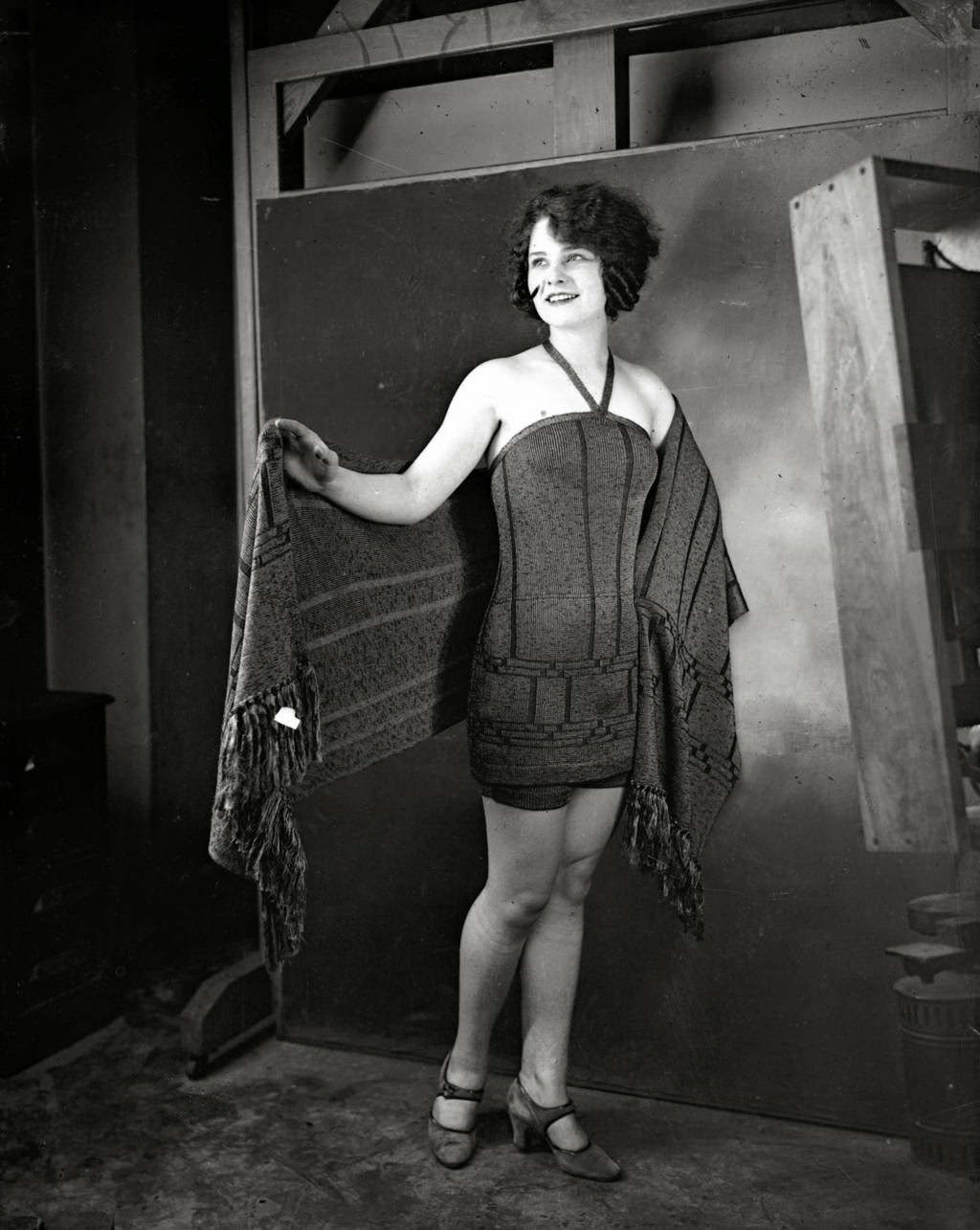
Margaret Leigh, billed as Miss Chicago, poses with an easy confidence that feels unmistakably 1920s—short, waved hair, a bright smile, and a sleek, form-fitting outfit that hints at the era’s fascination with modern silhouettes. Draped fabric falls from her arms like a stage prop, suggesting a studio or backstage setting where publicity photos were carefully composed. The scene balances glamour with a candid liveliness, the kind of image that would have helped a contestant stand out long before television made pageants a household spectacle.
Atlantic City’s Miss America beauty contest in 1924 was more than a parade of pretty faces; it was a national conversation about youth, style, and changing standards of femininity. Leigh’s fourth-place finish speaks to how competitive—and how widely watched—these early contests had already become, drawing city representatives into a single spotlight. For Chicago, her placement carried civic pride, linking the fast-moving energy of a booming metropolis to the new, headline-friendly culture of celebrity.
Flapper-era fashion and culture ripple through every detail here, from the streamlined lines to the confident posture that rejects older, more formal portrait conventions. Beauty-pageant history often reads like light entertainment, yet images like this reveal the machinery of modern media: posed photographs, public rankings, and the selling of an ideal that audiences could recognize instantly. Seen today, Leigh’s portrait is a small window into 1920s America—where style, ambition, and the camera’s gaze met on the threshold of a new age.