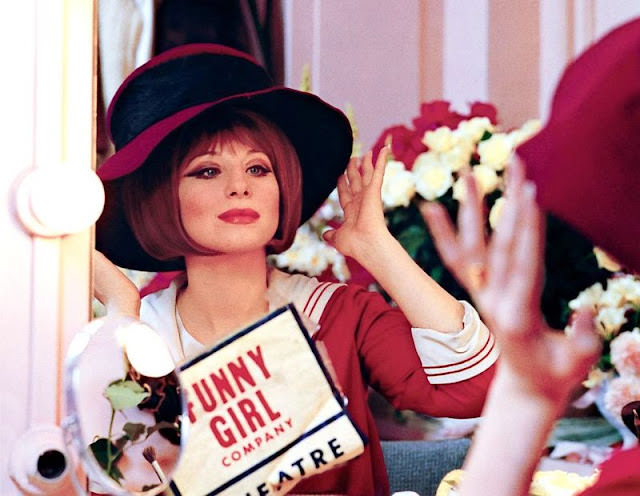
Framed by the warm glow of a dressing-room mirror, Barbra Streisand adjusts a wide-brimmed black hat with a deep red band, her gaze fixed on her reflection. The vanity bulbs and soft background blur create an intimate backstage atmosphere, while her red costume and crisp white trim echo the theatrical polish of a star preparing to step into character. A spray of pale flowers behind her adds a luxurious, almost cinematic softness that complements the poised, self-possessed expression on her face.
In the foreground, a “Funny Girl” program or poster peeks into view, its bold lettering anchoring the scene to the production celebrated in the title and linking performance to publicity. The composition doubles the moment through mirror and reflection, turning a private ritual—costume, makeup, and final checks—into a public image fit for a magazine spread. Color photography like this helped define the era’s visual language, where fashion, celebrity, and stagecraft were packaged together with glossy immediacy.
Published under the banner of Time Magazine in 1964, the photograph reads as both cultural document and style statement, capturing how Broadway glamour translated into mass-media iconography. The hat’s dramatic silhouette, the saturated reds, and the carefully staged dressing-room details speak to the decade’s appetite for bold design and modern femininity. For anyone searching mid-century fashion photography, “Funny Girl” imagery, or classic Barbra Streisand portraits, this backstage tableau offers a vivid window into 1960s entertainment culture.