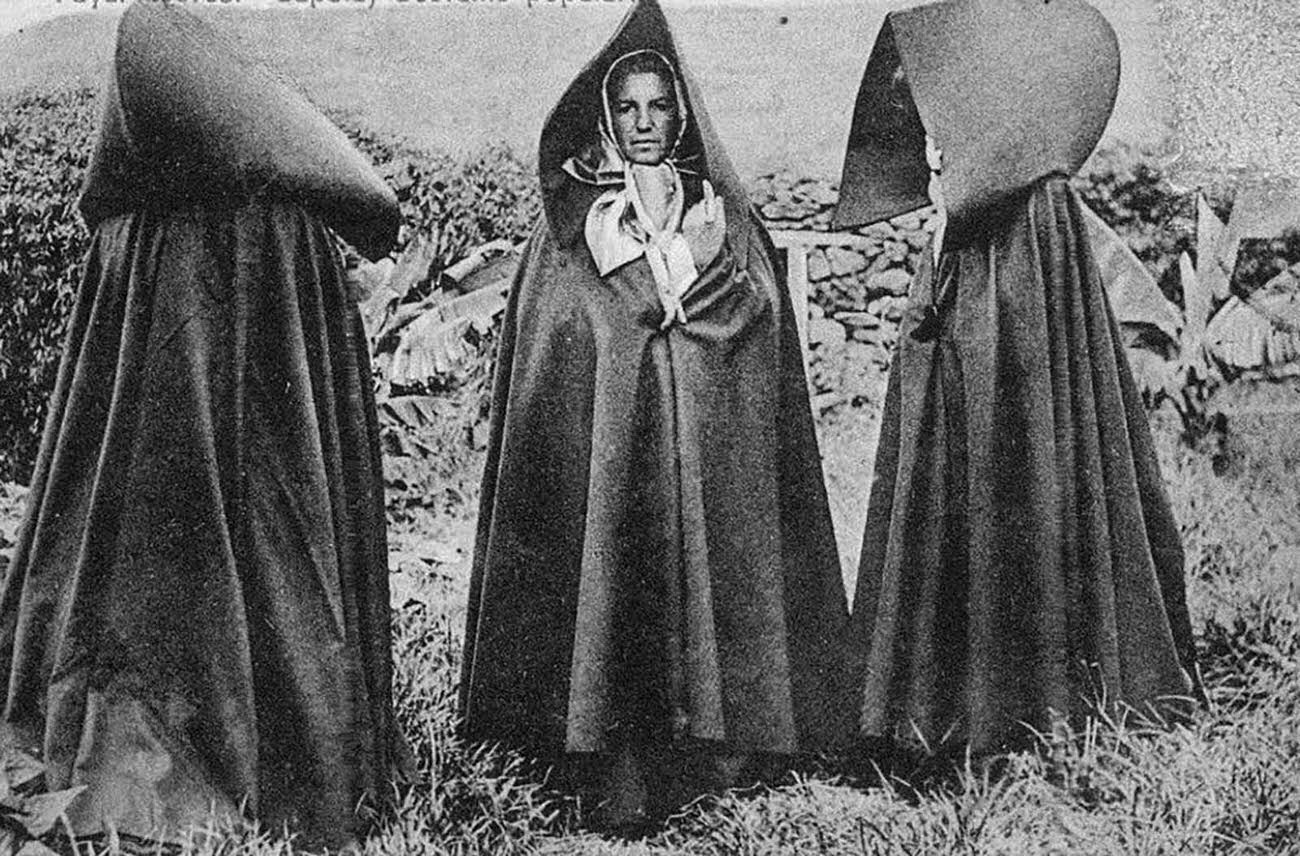
Three women stand outdoors wrapped in the striking Azorean hooded cape, a garment that turns the body into a flowing silhouette and the head into a bold, sculptural form. The oversized hoods flare like sails, framing one face in the center while the other two figures are seen in profile and from behind, emphasizing how the cape reads from every angle. Behind them, rough stonework and low vegetation hint at a rural island landscape, giving the scene a grounded, everyday authenticity.
Known in Portuguese culture as a traditional women’s cloak, the Azorean hood carries both practicality and presence: heavy fabric for wind and damp, generous coverage for warmth, and a stiffened hood that creates a private, shaded space around the wearer. In the photograph, the cape’s drape and weight are clear in the deep folds that fall to the ground, while the central figure’s lighter headscarf and collar peek out, offering a glimpse of layered dress beneath. The composition feels almost like a fashion study, yet the expressions and stance suggest lived experience rather than costume.
Fashion and identity intertwine here, making the Azorean hood a compelling subject for historical photography and cultural history alike. The garment reads as protection and statement at once—part weather shield, part social marker—capturing how regional dress can shape movement, posture, and the way a person meets the world. For anyone searching Portuguese women’s traditional clothing, Azores folk costume, or historical cape fashion, this image preserves a vivid example of island style that is as architectural as it is intimate.