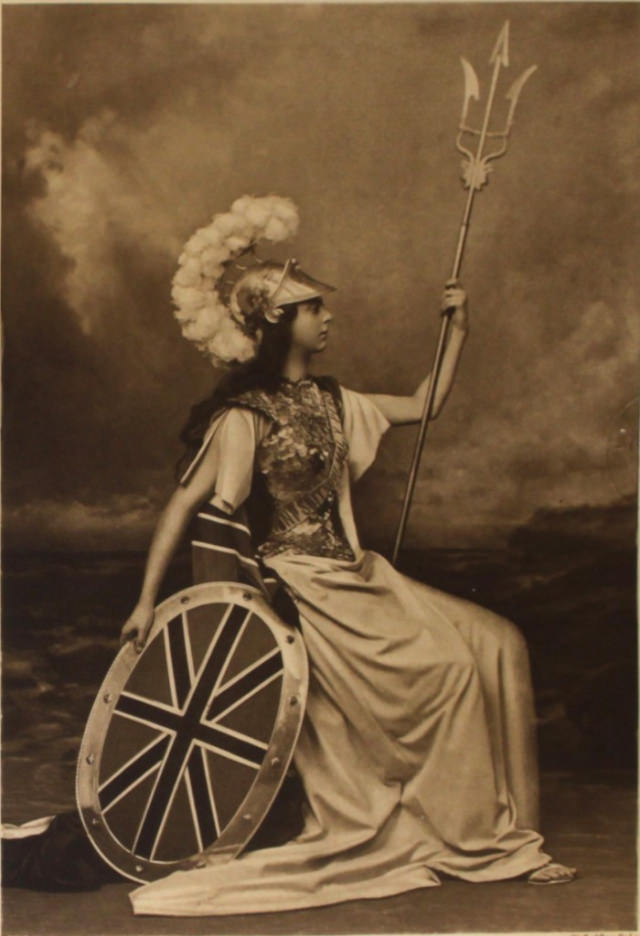
Poised in profile like a figure from classical statuary, Mrs Wolverton embodies Britannia with theatrical confidence, seated against a softly painted studio backdrop that suggests sea mist and open sky. A crested helmet crowns her dark hair, while a dramatic plume frames her head in a halo of pale feathers. The overall composition is carefully staged to read instantly as allegory: calm authority, watchfulness, and a distinctly imperial grandeur.
Costume details do much of the storytelling, from the long, flowing gown arranged in heavy folds to the richly patterned bodice that catches the light. In her right hand she raises a tall trident, its prongs lifted like a standard, and with her other arm she steadies a large round shield emblazoned with the Union design. Draped fabric at the shoulders hints at a cloak, and the restrained, dignified posture turns the masquerade into a formal portrait rather than a fleeting party snapshot.
Images like this, associated with the famed Devonshire House Ball of 1897, reveal how late-Victorian high society used fancy dress to perform history, mythology, and national identity. Britannia was more than a costume choice; it was a symbol worn with intention, merging fashion, politics, and spectacle into one carefully photographed moment. For anyone searching for historical costume photography, Victorian masquerade portraits, or the visual culture of elite balls, Mrs Wolverton’s Britannia remains a striking example of pageantry captured for posterity.