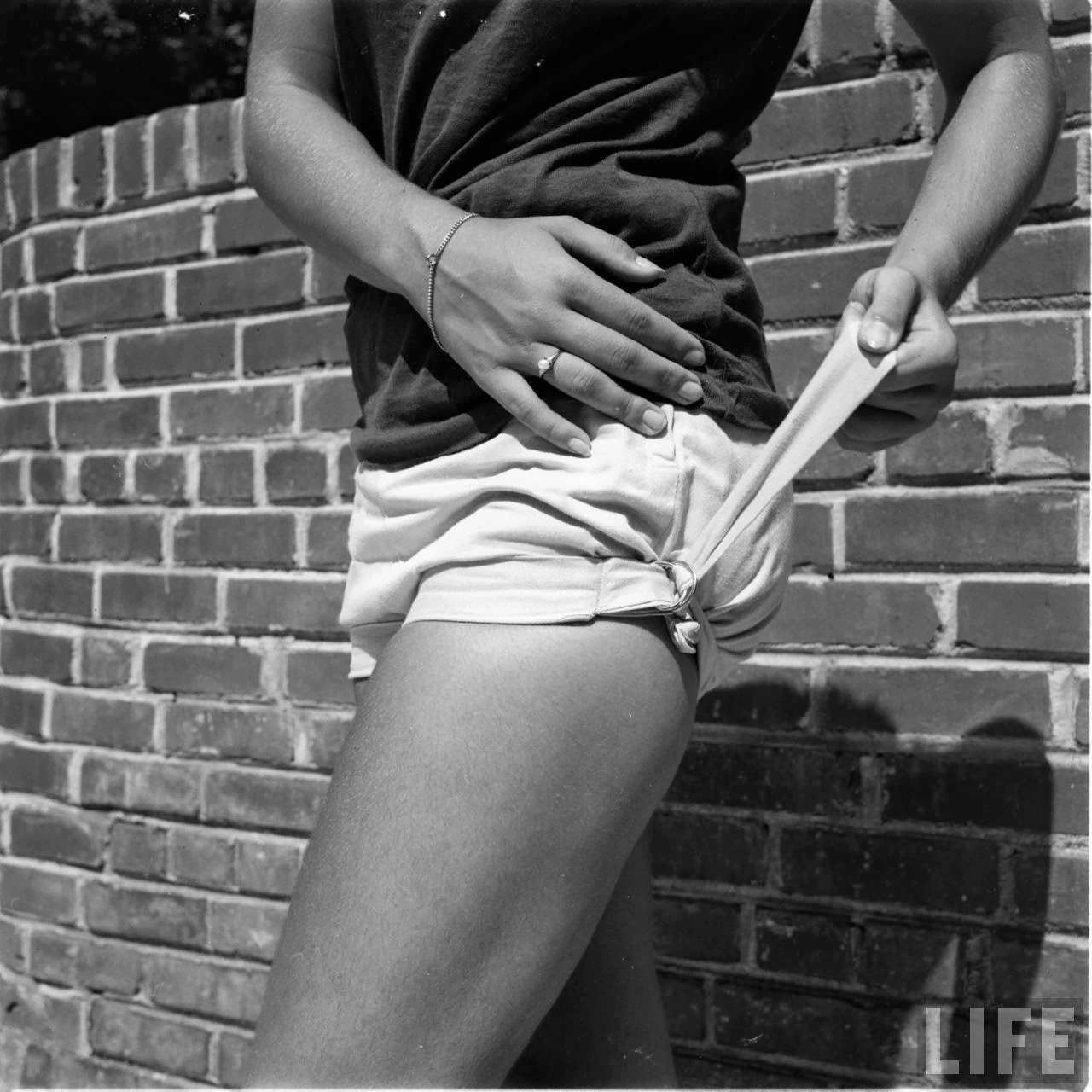
Against a plain brick wall, the camera crops in tight on a young woman’s midsection and legs, letting the clothing do the talking. High-waisted short shorts sit snugly at the hips, their clean lines and bright fabric sharply contrasted by a dark, tucked top. One hand rests at the waistband while the other tugs a side tie detail, a small gesture that turns an everyday outfit into a posed statement about fit, comfort, and control.
In 1950s America, where tidy silhouettes and “proper” presentation were often treated as social rules, abbreviated shorts could read like a quiet act of defiance. The high waist is key: it nods to the decade’s love of structure while pushing the hemline upward into new territory, pairing classic tailoring with a bolder sense of exposure. What looks playful here also hints at larger shifts—youth culture, leisure time, and a growing willingness to test the boundaries of respectable dress.
Fashion rebels rarely announce themselves with speeches; they do it with seams, hems, and how they stand in the sun. This historical photo invites a closer look at the rise of the high-waisted short short as both style and cultural signal, capturing the tension between mainstream tastes and the thrill of trying something daring. For readers interested in 1950s fashion history, American culture, and the evolution of women’s casual wear, it’s a vivid reminder that a small garment can carry a big argument.