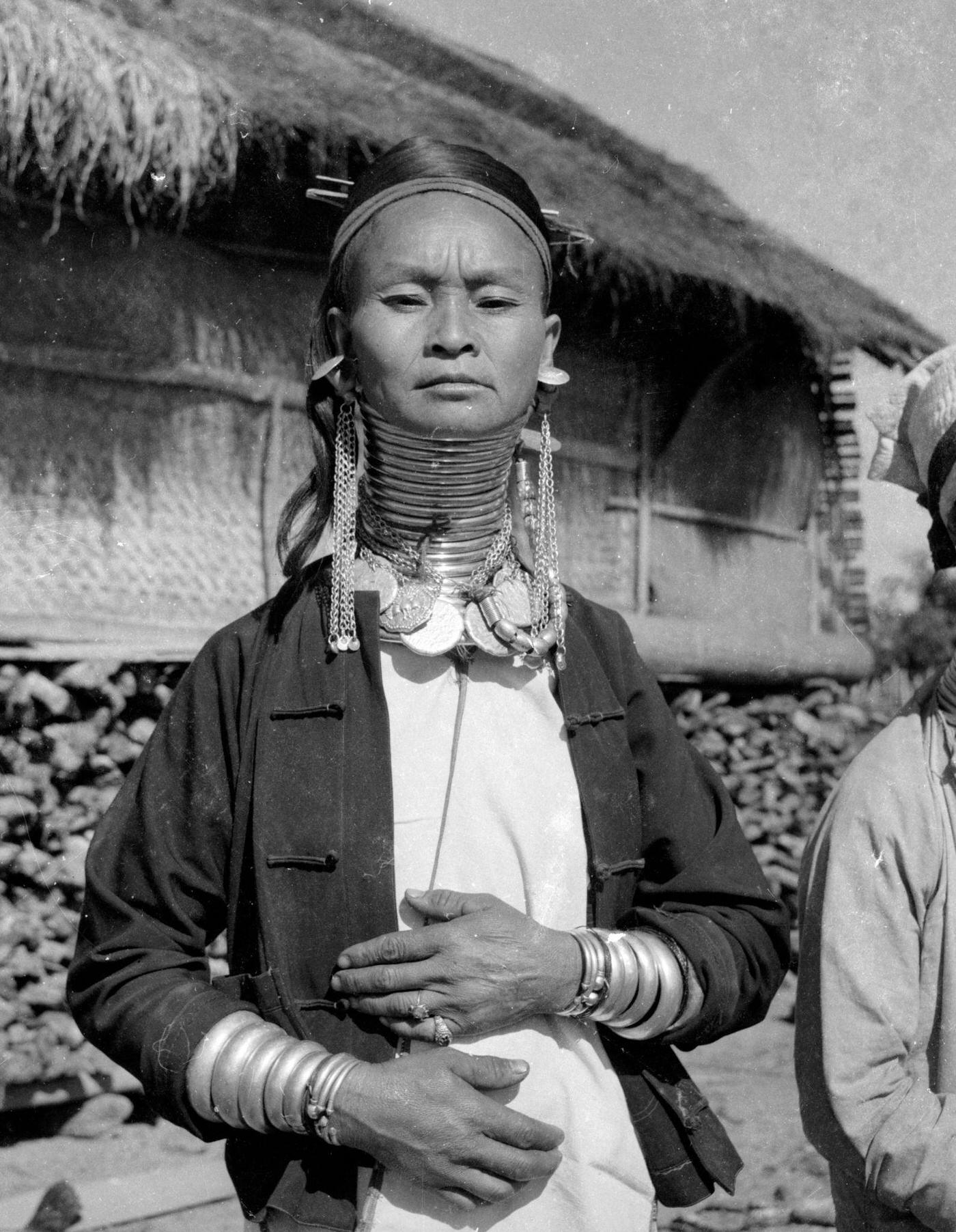
Sunlight falls hard across a thatched-roof house as a Padaung (Kayan Lahwi) woman faces the camera with a steady, unsmiling gaze. Her neck is encircled by stacked brass rings that rise from collarbone to jawline, their metal catching the light like a single continuous coil. Long earrings and layered ornaments frame her face, while the dark jacket and pale blouse beneath create a stark contrast that draws the eye back to the gleaming bands.
Details in the portrait speak to everyday life as much as ceremony: bangles crowd both wrists, and her hands rest calmly at her midsection, suggesting a moment paused rather than staged. The background—woven wall panels, rough timber, and a scatter of cut wood—anchors the scene in a village setting, placing cultural tradition within the practical rhythms of home. Even the partial figure at the edge of the frame hints at community, reminding viewers that these adornments exist within social life, not in isolation.
Seen through the lens of 1964 Myanmar, the photograph becomes a record of fashion, identity, and the enduring visibility of Indigenous practice. The neck rings, often sensationalized in later retellings, appear here as part of a complete aesthetic: textiles, jewelry, posture, and presence working together to signal belonging and status. For readers searching the history of the Padaung tribe, Kayan women’s brass rings, or Myanmar cultural heritage, this image offers a direct, respectful glimpse into a tradition carried on the body and remembered through the archive.