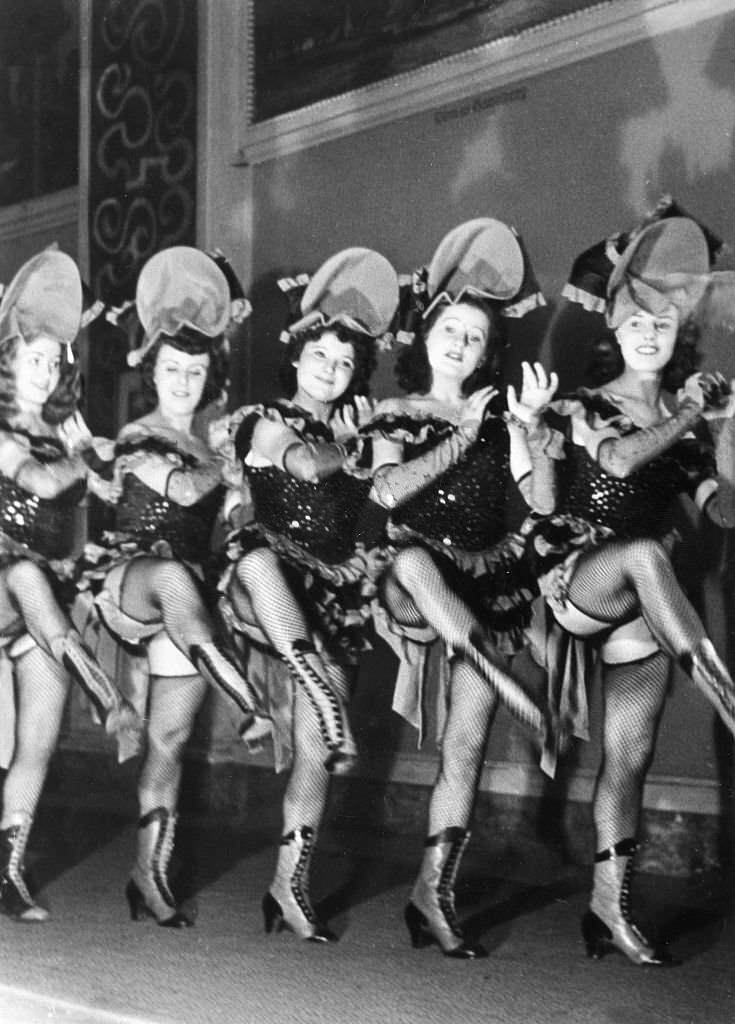
A line of can-can dancers kicks in crisp unison, their raised skirts and fishnet-clad legs forming a rhythmic frieze across the stage. Sequined bodices catch the light, while tall, buttoned boots and gloved hands sharpen the choreography into something both athletic and teasing. The performers’ tilted hats and bright, practiced smiles suggest a number designed to dazzle from the back row as much as the front.
Behind the glitter sits the unmistakable architecture of a theater interior—paneling, decorative ironwork, and the close quarters that make the dancers feel almost within arm’s reach. The tight formation hints at the precision demanded by revue-style ensemble work, where timing and spacing mattered as much as flair. Even in a single frozen moment, the can-can’s reputation for high-energy spectacle comes through in the tension of lifted knees and pointed toes.
Linked to Emmerich Kálmán’s operetta “Gräfin Mariza” at Berlin’s Neues Schauspielhaus, the scene reflects how early 20th-century stage culture blended operetta charm with popular dance thrills. Costuming here reads as a careful negotiation between elegance and provocation, using sparkle, lace, and movement to turn music into visual excitement. For historians of fashion and performance, the photo offers a vivid glimpse of how cabaret-adjacent choreography entered mainstream theater, selling modernity one synchronized kick at a time.