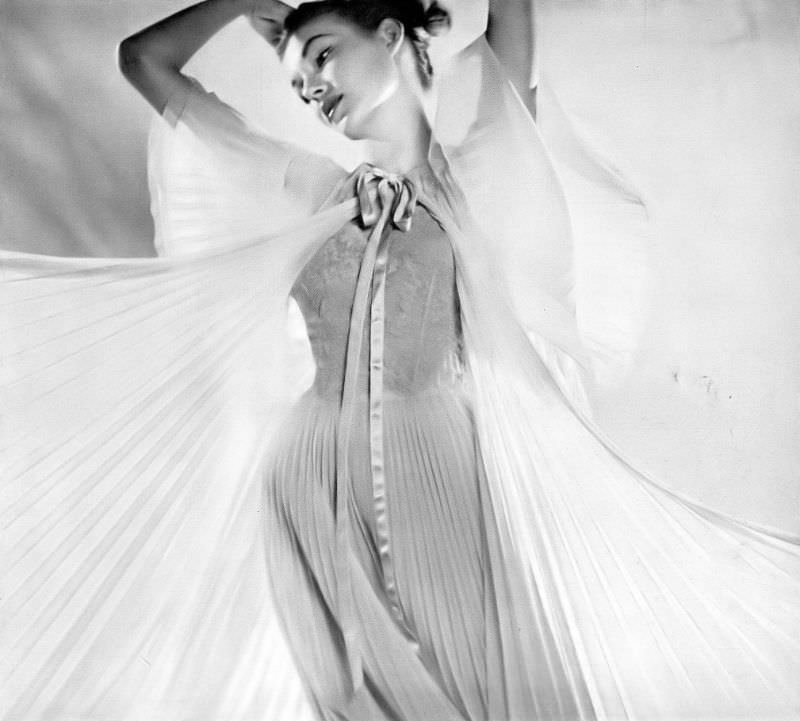
Arms lifted overhead, Liz Pringle turns her body into a sweep of fabric and light, letting the peignoir billow like a stage curtain caught in a breeze. Pleated nylon radiates outward in crisp, fanlike lines, while a narrow satin trim runs down the center, drawing the eye through the silhouette. The camera angle and soft focus heighten the sense of motion, giving this fashion image the airy drama of mid-century glamour photography.
The title’s “ice-blue” tone can’t be seen directly in the monochrome print, yet the luminous highlights suggest a cool, sheer material designed to shimmer under studio lamps. Ecru lace at the bodice adds a tactile contrast to the smooth pleats, signaling the era’s fascination with lingerie that looked refined as well as intimate. Pringle’s poised expression and elegant posture keep the styling sophisticated, balancing romance with the clean, modern lines prized in early-1950s fashion.
June 1952 sits in the heart of a postwar consumer moment when brands like Vanity Fair sold not only garments but an ideal of at-home elegance—women’s sleepwear presented as couture in miniature. The composition favors movement over setting, erasing distractions so texture, drape, and workmanship become the story. For collectors and researchers of vintage lingerie, 1950s sleepwear, and classic fashion advertising, the photograph remains a vivid example of how studio artistry could make a peignoir set feel almost weightless, like a brief performance captured on film.