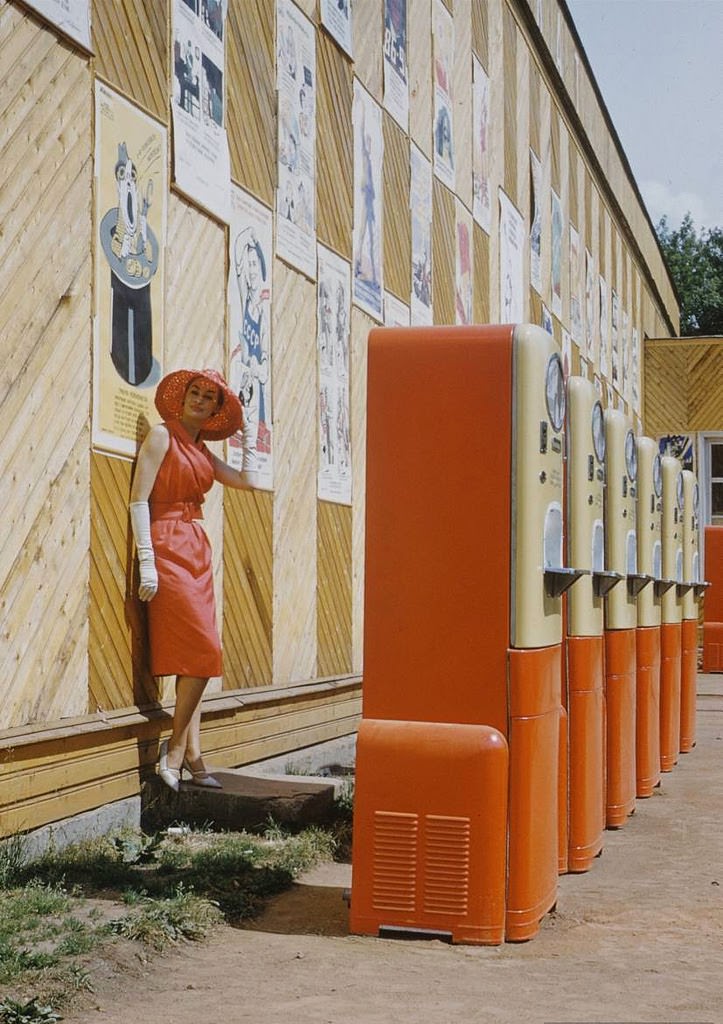
A flash of coral fabric and a wide-brimmed hat turns an ordinary walkway into a runway, set against a wooden wall plastered with posters and illustrations. The model’s white gloves and poised stance suggest a carefully staged fashion moment, while the bold, industrial row of orange-and-cream vending machines (or dispensers) lines the edge like modern props. Color does much of the storytelling here: warm tones dominate, amplifying the sense of novelty and spectacle.
In 1959, Moscow became an unlikely stage for Western couture and Cold War curiosity, and the title’s “fashion shock” feels written into the scene’s contrasts. The sleek silhouette and polished accessories read as Parisian elegance, yet the surroundings—temporary-looking construction, public signage, utilitarian equipment—anchor the moment firmly in the everyday Soviet street environment. What emerges is not just clothing, but a cultural encounter where style acts as a language across ideological borders.
For readers drawn to fashion history, Dior in Moscow is less a single event than a snapshot of exchange: design meeting diplomacy, consumer fantasy meeting public space. The posters behind her hint at mass messaging, while the carefully composed pose foregrounds individual glamour—two different visual systems sharing one frame. Seen today, the photograph invites a closer look at how 1950s fashion, street culture, and politics could collide in one vivid, unforgettable image.