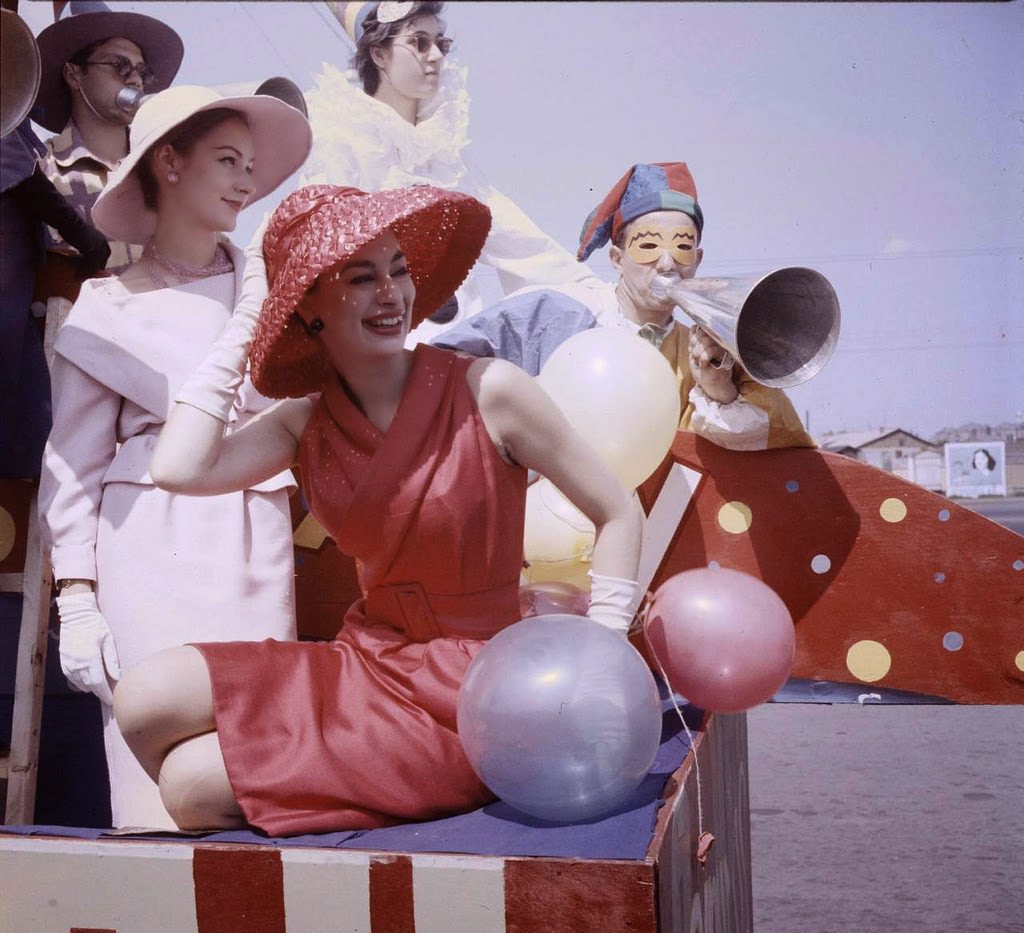
Silk gloves, wide-brimmed hats, and a scarlet dress steal the frame, turning an ordinary street moment into a small spectacle of luxury. The models pose with easy confidence amid balloons and playful props, as if a fashion parade has spilled into public space and invited everyone to stare. In the background, everyday figures linger close enough to watch, blurring the line between runway fantasy and the lived city.
Moscow in 1959 was a place where culture carried political weight, and what people wore could signal more than taste. A Dior presentation on Soviet streets landed like a bright, surprising headline—Western couture translated into movement, color, and attitude in front of a curious crowd. The photo’s theatrical details, from the festive staging to the exaggerated accessories, hint at how carefully the event balanced glamour with public performance.
Fashion historians often describe this moment as a “shock,” but the real story lives in the expressions and body language: delight, confidence, and the thrill of being seen. Here, haute couture becomes a form of soft power, an export not just of clothing but of modernity, femininity, and consumer imagination. For readers interested in Cold War culture, Dior in Moscow, and the history of Soviet style, this image offers a vivid doorway into a brief, unforgettable collision of worlds.