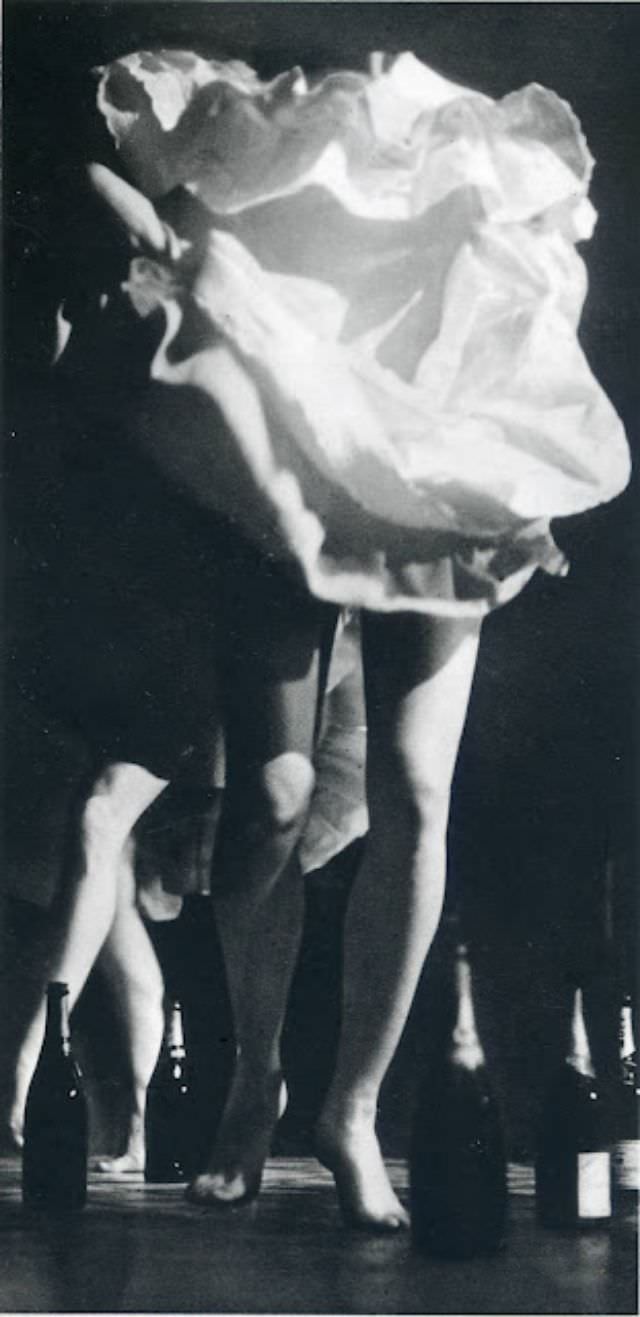
Soft blur and sharp contrast turn the scene into a whirl of fabric, as a voluminous skirt billows like a white cloud against a dark interior. Only glimpses of the sitter remain fully legible—long legs caught mid-step, bare feet poised on a wooden floor—while the upper body dissolves into motion. Bottles stand like quiet witnesses at the edges, grounding the composition in the everyday even as the figure seems to spin beyond it.
Rather than presenting a polished, front-facing likeness, the photograph leans into personality through movement, suggesting a woman who refuses to be pinned down by etiquette or a static pose. The high-spirited gesture reads as flirtation, play, or private performance, and the camera’s willingness to accept blur becomes a kind of tribute to modern life—fleeting, intimate, and full of surprise. In the world evoked by Lartigue’s portraits of Parisian women, fashion is not merely decoration; it is a living extension of mood and individuality.
Fashion and culture meet in the details: the dramatic silhouette of the dress, the candid informality of bare feet, and the theatrical contrast between bright cloth and shadowed space. The frame hints at nightlife or an after-party moment, where elegance loosens into laughter and the room’s objects—floorboards, glass, and darkness—become part of the story. What endures is not just a “pretty face,” but the spirited presence of a woman in motion, made memorable precisely because she will not sit still for the camera.