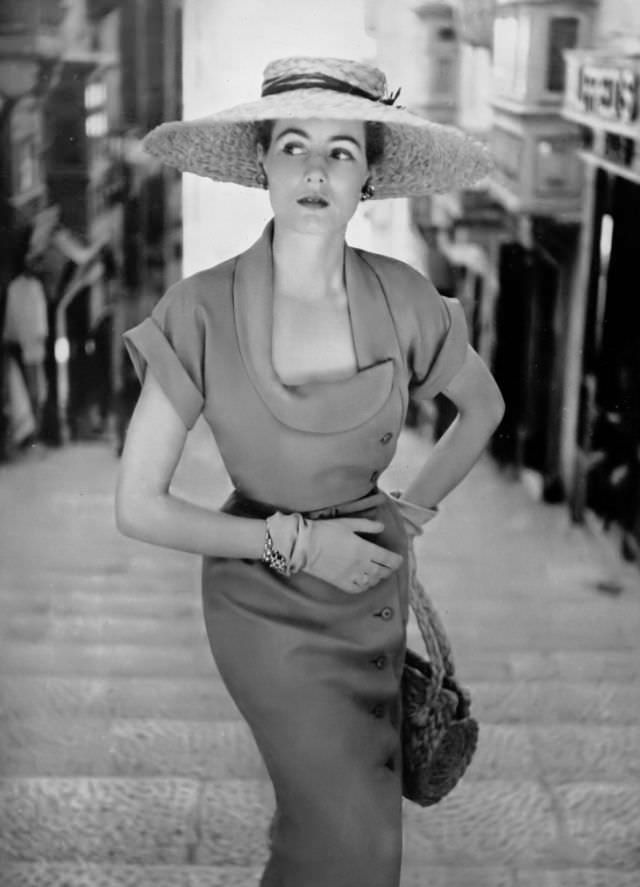
Poised on a sunlit street, Pat O’Reilly turns her gaze sideways beneath the dramatic sweep of a wide-brim hat, the brim casting a soft shadow that heightens the editorial mood. The camera catches her mid-stride on stone steps, with shopfronts and passersby dissolving into a gentle blur behind her, suggesting a lively urban backdrop without stealing focus from the look. Even in monochrome, the title’s promise of a tangerine shantung dress feels vivid, inviting the reader to imagine the crisp sheen and texture that made such fabrics a postwar luxury.
Dorville’s design reads as early-1950s elegance distilled: a sculpted neckline, fitted waist, and a line of buttons drawing the eye down the skirt in a neat vertical rhythm. The styling balances polish with practicality—short sleeves, a slim belt, and a woven handbag that echoes the hat’s natural texture, while jewelry remains restrained, more sparkle than statement. Her posture—one hand at the waist, shoulders set—projects the confident femininity that fashion magazines like Harper’s Bazaar UK cultivated for their readers.
Published in May 1951 and set in Malta per the caption, the image carries the breezy promise of travel that period fashion photography often used to sell a silhouette as much as a lifestyle. The street setting lends authenticity, making couture-ready dressing appear at home in everyday motion, not just in studio perfection. For collectors and researchers of 1950s fashion, Harper’s Bazaar UK editorials like this offer a rich visual record of how texture, tailoring, and accessories worked together to define a season’s ideal of modern glamour.