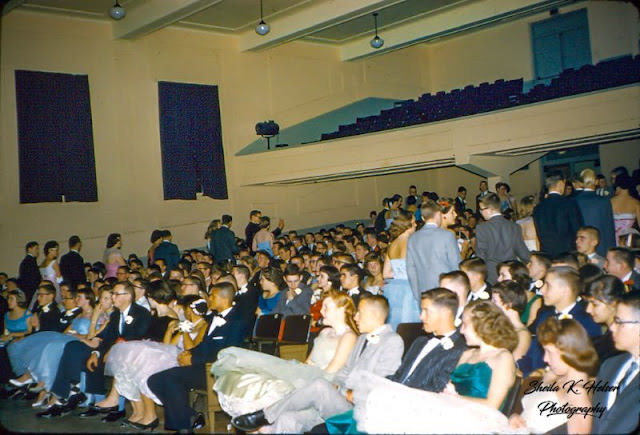
Rows of teenagers in formalwear fill a school auditorium, turning an ordinary assembly space into the social stage for the Mt. Vernon High School junior prom. Boys in dark suits and bow ties sit shoulder to shoulder with girls in pastel cocktail dresses and full skirts, their hair carefully set in the late-1950s style. The crowd’s relaxed posture—some chatting, some scanning the room—suggests the anticipatory lull before the music and dancing truly begin.
In the middle distance, students stand in small clusters along the aisle, a classic prom ritual of being seen and seeing others as friends and couples navigate the room. Overhead, simple ceiling lights and the balcony seating frame the scene, emphasizing how school architecture shaped teenage memories long before dedicated event venues became common. The mix of seated guests and moving figures creates a lively, documentary feel, like a candid moment caught between posed portraits.
Details of fashion and culture make the era tangible: neat lapels, corsages pinned at the shoulder, and dresses in soft colors that read as youthful rather than glamorous. The auditorium’s orderly rows contrast with the informal energy of the students, capturing that particular mid-century blend of propriety and excitement. As a historical snapshot of American high school prom tradition, it preserves the shared rite of passage—part community gathering, part teenage dream—played out under the watchful lights of a familiar school hall.