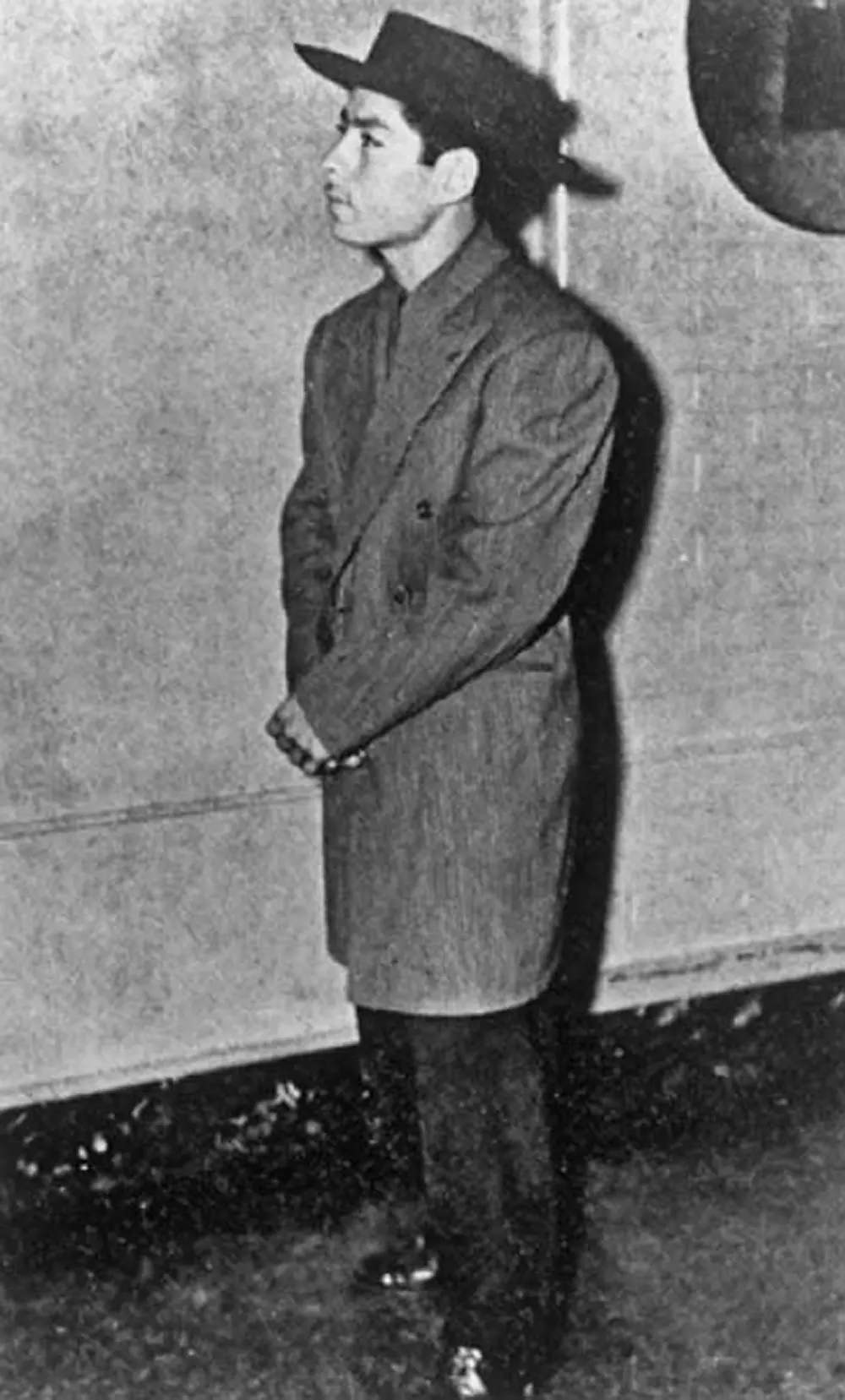
A young man stands in crisp profile against a plain wall, his hands folded and his gaze fixed beyond the frame, as if posing for a quick street-side portrait. He wears a broad-brimmed hat and a long, structured overcoat that signals the “Mexican drape” interpretation of the zoot suit—sharp shoulders, generous fabric, and a deliberately elongated silhouette. The stark lighting throws a clean shadow behind him, emphasizing the outfit’s tailored lines and the quiet confidence of the stance.
The zoot suit was never just clothing; it was a statement stitched into every seam, tied to music, nightlife, and youth identity in Mexican American communities and beyond. In an era when conformity was often demanded, the exaggerated proportions and careful styling broadcast individuality and belonging at once. The drape style in particular highlights how local taste and craftsmanship shaped a broader fashion phenomenon, turning a suit into a recognizable cultural signature.
Viewed through the lens of fashion history and social conflict, this portrait echoes the tensions that swirled around zoot suits in public life, where style could be read—unfairly—as provocation. The simplicity of the backdrop makes the point even clearer: all attention falls on the cut of the clothes and the person wearing them, a reminder of how appearance can become a battleground for respectability, pride, and prejudice. For readers tracing the roots of the Zoot Suit Riots and their cultural aftershocks, this image offers a grounded, intimate look at the style that helped ignite a wider clash.