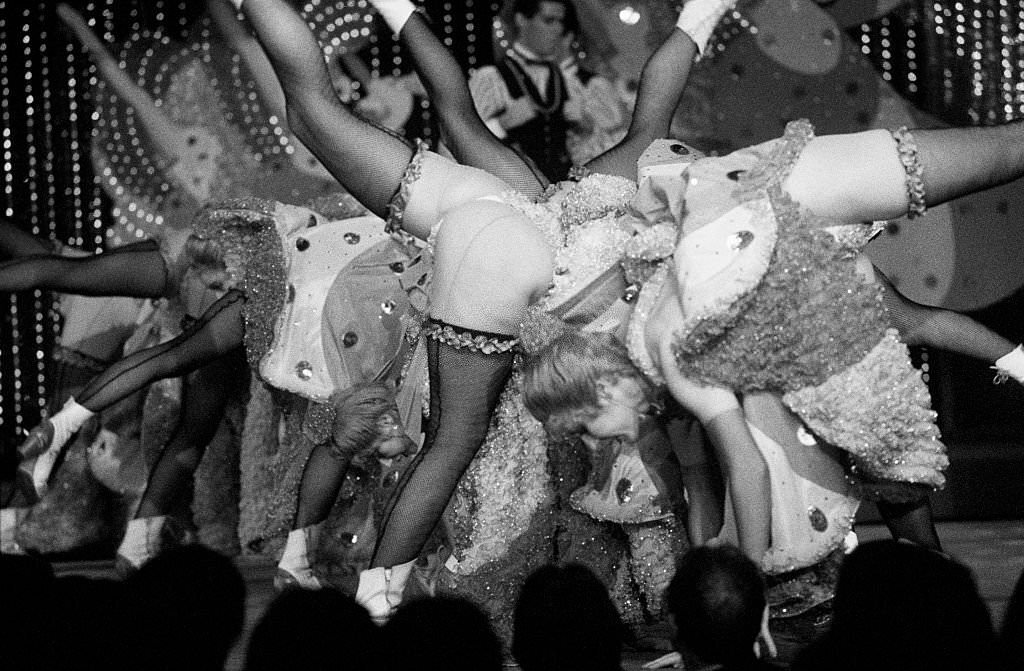
A line of cancan dancers snaps into a synchronized kick, bodies folded forward as legs flare high in a fan of motion across the stage. Sequined skirts and ruffled petticoats catch the light, while dark stockings and pale footwear sharpen the graphic contrast of the choreography. Behind them, a performer in formal attire is partly visible, framed by a curtain of sparkling lights that suggests a classic cabaret setting.
The scene reads as an homage to the legendary nightlife of Paris, echoing the Moulin Rouge imagery that artists like Toulouse-Lautrec turned into enduring icons. In the exaggerated lines of the high kicks and the playful showmanship of the costumes, the spirit of celebrated performers such as La Goulue and the chanson tradition associated with Aristide Bruant feels close at hand, even without a specific venue named. Cabaret culture is present here as both spectacle and memory—an onstage revival of fin-de-siècle allure for a later audience.
Beyond the glamour, the photograph emphasizes how physically demanding the cancan has always been: precise timing, strength, and stamina disguised as effortless flirtation. The crowd appears as a dark band at the bottom edge, reminding us that these performances were built for live response—gasps, laughter, applause—an immediate exchange between dancers and spectators. As a piece of fashion and culture history, it preserves the theatrical vocabulary of cabaret: glittering surfaces, bold silhouettes, and choreography designed to dazzle in an instant.