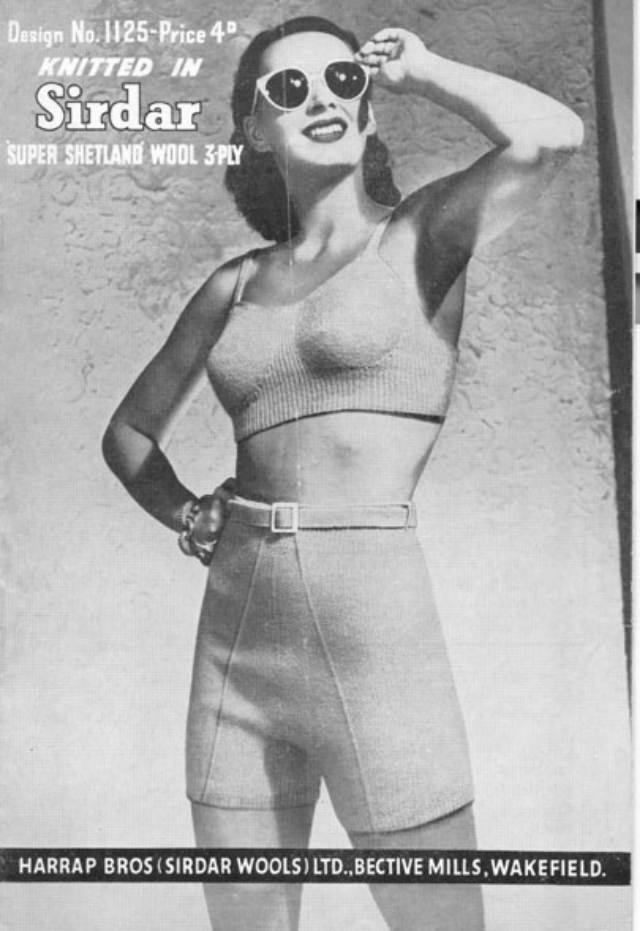
Bold lettering for “Sirdar” and “Super Shetland Wool 3 Ply” frames a confident model in a knitted two-piece beach ensemble, posed with one hand at her hip and the other lifting round sunglasses toward the sun. The set pairs a fitted, bra-like top with high-waisted shorts cinched by a belt, a silhouette that reads both sporty and carefully tailored. Even in monochrome, the texture of the knit is the star, promising stretch, warmth, and a smooth line that prefigures the era’s fascination with practical glamour.
Practicality sits at the heart of 1940s women’s bathing suits, and this advertisement-like image hints at how wartime-minded thrift and postwar optimism could share the same seam. A knitted suit suggests home production or accessible patterns, while the design still emphasizes a fashionable waist and a streamlined profile suited to seaside promenades as much as swimming. The sunglasses, bracelet, and polished hair complete the story: beachwear wasn’t only for the water, but for being seen—modern, active, and self-assured.
Fashion and culture meet in details like the visible “Design No.” and price, turning the photograph into a small artifact of consumer life rather than a simple studio portrait. Branding for Harrap Bros (Sirdar Wools) and the mention of mills underline the textile industry’s role in shaping what leisure looked like, linking a sunny pose to factories, patterns, and supply chains. Together, the image and title point to the 1940s moment when women’s swimwear evolved into a statement of independence—functional, flattering, and unmistakably of its time.