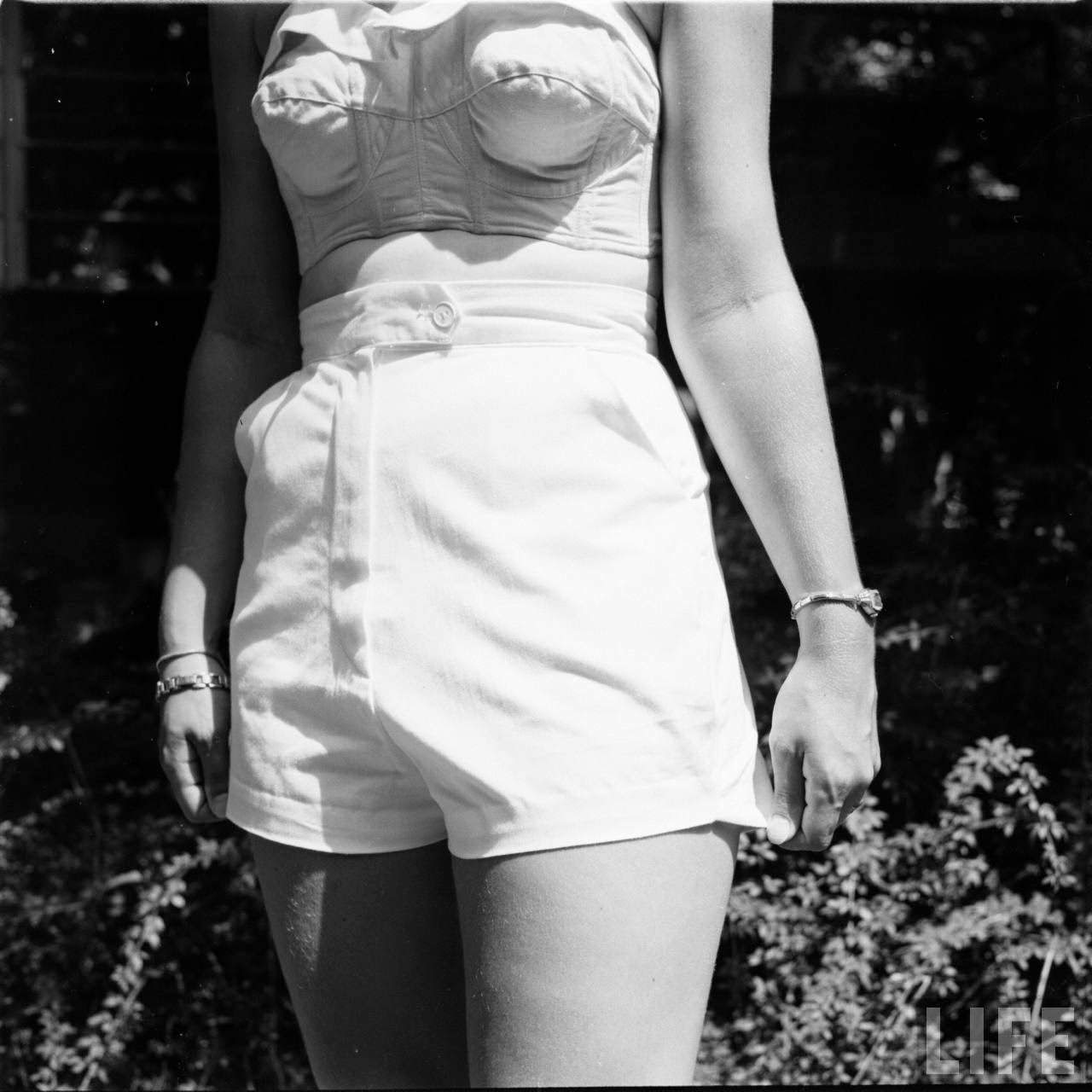
Sunlit and unapologetic, the outfit in this LIFE-era style photograph centers on a pair of crisp, high-waisted short shorts—tailored, structured, and cut to emphasize a long line from waist to thigh. A fitted, bustier-like top completes the silhouette, while simple wristwatches and bare arms keep the look grounded in everyday wear rather than costume. The pose and tight framing place the clothing front and center, inviting the viewer to read the seams, the buttoned waistband, and the confident practicality of the design.
In 1950s America, a garment like this sat at a fascinating crossroads between modesty and modernity: the waist rises high, yet the hem climbs higher than older norms would have allowed. The “rebellion” wasn’t always loud; sometimes it arrived as a small shift in proportion, a hotter-weather solution that also signaled a changing attitude toward youth, leisure, and women’s autonomy in style. Clean lines and bright fabric suggest a culture newly enamored with streamlined sportswear, where looking put-together could still mean dressing for movement and warmth.
Fashion history often lives in details like these—how a waistband sits, how a leg opening is shaped, how a summer outfit negotiates comfort and social expectations. This post explores the rise of the high-waisted short short as both a trend and a cultural clue, tracing how mid-century American fashion edged toward bolder silhouettes without abandoning polish. For readers interested in 1950s fashion, women’s shorts, vintage summer style, and the evolving language of American pop culture, the image offers a sharp, memorable entry point.