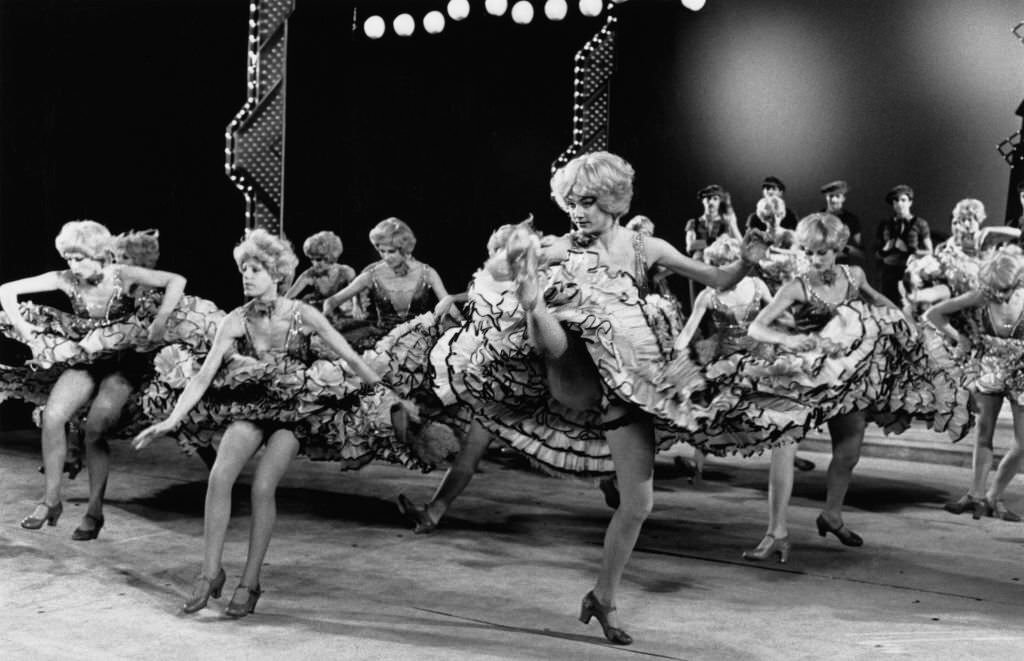
Feather-light ruffles explode into motion as a line of dancers launches into the high kicks and sharp turns associated with the Moulin Rouge dance troupe. The performers wear matching stage costumes—short, layered skirts with bold trim, fitted bodices, and heels—designed to amplify every leg extension and whirl. Under a row of bright stage lights, their synchronized poses create a living pattern across the floor, all energy and controlled spectacle.
At the center, one dancer lifts her knee high while the others mirror the momentum, arms angled for balance and showmanship. The cancan’s physical demands are written into the posture: core strength to hold the line, stamina to keep tempo, and precision to avoid collision as skirts billow outward. Even in a still frame, you can sense the rhythm of the choreography and the theatrical timing that made this style a hallmark of Parisian nightlife and cabaret culture.
Behind the front line, the stage setting hints at a full revue, with additional figures and set pieces receding into the background. The overall composition—repeated costumes, disciplined spacing, and the dramatic contrast of light and shadow—captures the Moulin Rouge’s brand of glamour: a carefully engineered fantasy built from rehearsal, athleticism, and impeccable group timing. For anyone searching the history of the cancan dance, this photograph offers a vivid look at how fashion, performance, and popular entertainment blended into an unforgettable signature act.