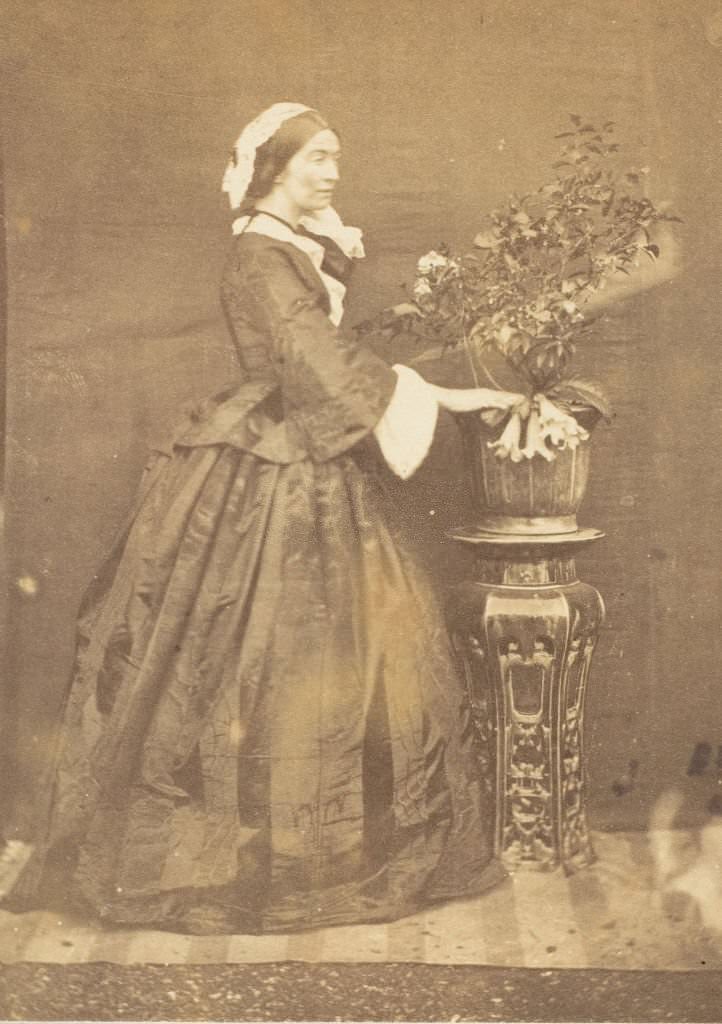
Poised in profile at Barrackpore, the Viscountess Canning is presented with a composed, almost stage-like formality that typifies mid-19th-century portrait practice. Her gown swells outward in a full crinoline silhouette, the fabric falling in heavy, structured folds that signal both fashion and status. A light cap or head covering frames her face, while the soft, sepia tone and gentle blur at the edges lend the scene a quiet, timeworn intimacy.
Beside her stands an ornate pedestal table supporting a potted flowering plant, an arrangement that reads as carefully chosen studio symbolism—cultivation, refinement, and domestic order. One hand reaches toward the leaves as if to steady the pot or adjust a sprig, adding a small moment of movement to an otherwise formal pose. The plain backdrop keeps attention on the interplay between dress, gesture, and decorative object, the essentials of Victorian visual storytelling.
Fashion and culture meet here in the unmistakable architecture of the crinoline, a hallmark of 1850s women’s wear that reshaped the body into a fashionable bell. The portrait’s restrained elegance also hints at the broader world behind the sitting: a British imperial household in India, expressed through etiquette, costume, and carefully curated respectability. As an image title anchored to 1858, it invites viewers to read clothing and setting as historical evidence—how identity, power, and femininity were staged for the camera in the nineteenth century.