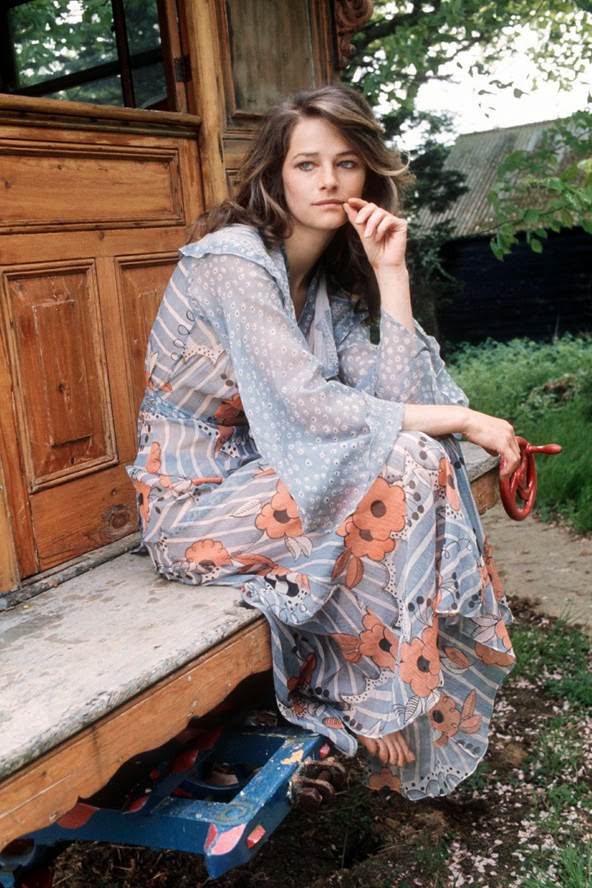
Leaning on the threshold of a weathered wooden doorway, Charlotte Rampling wears a flowing, sheer-sleeved maxi dress patterned with oversized florals and soft geometric stripes. The relaxed silhouette and gauzy fabric feel unmistakably of the 1970s, when fashion moved toward freedom of movement and an easy mix of romantic prints with everyday practicality. Even the natural setting—greenery, open air, and a casual stoop—adds to the era’s preference for lived-in style over posed formality.
What makes this portrait linger is its quiet confidence: an unhurried posture, bare feet tucked close, and a gaze that meets the viewer without performance. The dress, with its delicate dots and bold blossoms, balances sweetness and edge, echoing the decade’s push-and-pull between bohemian softness and modern cool. Small details—like the pop of red from a handbag in hand—underline how 1970s fashion icons turned simple accessories into punctuation marks.
As part of “The Faces That Defined a Decade,” this image highlights why Charlotte Rampling remains a touchstone in fashion and culture: she embodies mood as much as wardrobe. The photograph reads like a study in texture and attitude—wood grain against chiffon, garden light against muted tones—capturing the kind of effortless styling that still inspires editors, designers, and vintage collectors today. For anyone searching 1970s fashion inspiration, iconic celebrity style, or the enduring allure of boho floral dresses, this moment offers a timeless reference point.