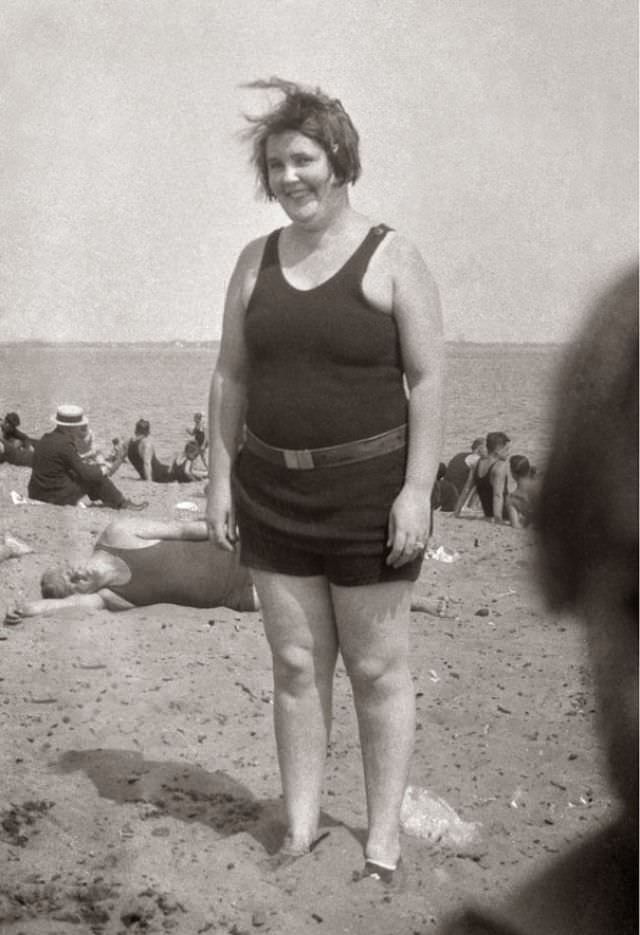
Wind-tossed hair and a relaxed smile give this beach portrait the easy confidence associated with 1930s leisure culture. The swimmer stands on sand in a practical one-piece, its scoop neckline and broad shoulder straps designed for movement rather than ornament, while a short, skirt-like bottom adds modest coverage. Behind her, other sunbathers lounge near the shoreline, reinforcing the sense of a popular seaside outing rather than a staged fashion moment.
Swimwear in this era was negotiating new ideas of modernity—athletic silhouettes, improved stretch fabrics, and the growing acceptance of sunbathing all pushed designs toward a cleaner, more body-conscious line. The suit’s darker tone and simplified cut echo the decade’s preference for streamlined elegance, while the belted waist and neat hem suggest a continued attachment to structure and propriety. Details like these help explain how 1930s swimsuits bridged the gap between earlier, heavier bathing costumes and the more revealing styles that would follow.
Everyday snapshots like this are invaluable to fashion history because they show how trends looked in real life, on real bodies, in the bright glare of the beach. Instead of a studio model, we see a candid figure dressed for comfort, enjoyment, and social norms of the time—an authentic glimpse of vintage swimwear as lived experience. For readers searching the evolution of 1930s swimwear, vintage beach photos such as this one reveal not only changing hemlines and cuts, but the culture of leisure that made them meaningful.