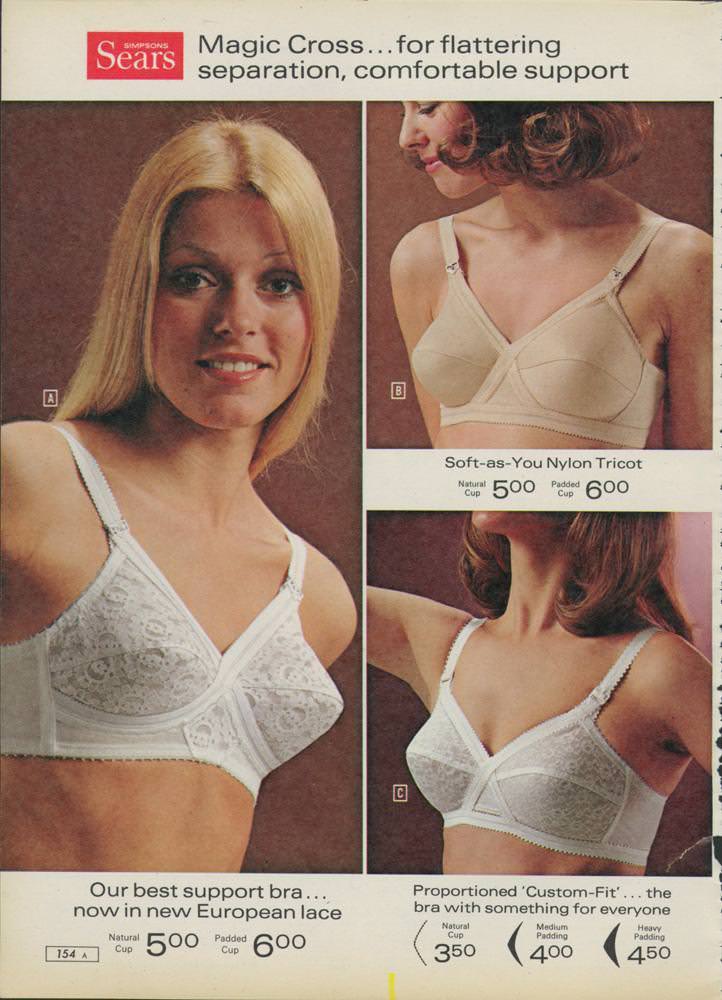
Simpsons Sears headlines the page with promises of “Magic Cross” comfort and separation, a reminder that a 1972 women’s fashion catalog wasn’t only about what showed on the street—it also sold the unseen architecture beneath it all. The layout reads like a mini showroom, presenting the same idea from multiple angles: close-up lace, supportive seams, and adjustable straps designed to look modern while feeling practical. Even the warm, studio backdrop and glossy styling echo the era’s confident, consumer-friendly polish.
Lingerie pages like this help explain why Fall/Winter style stories of the early 1970s could swing between bold silhouettes and everyday ease. When mini-skirts and shorter hemlines were still in the mix, fit and line mattered, and catalogs leaned on reassuring language—“comfortable support,” “custom-fit,” and “soft-as-you”—to translate technical garments into lifestyle aspirations. The emphasis on nylon tricot and European lace also speaks to a moment when synthetics and decorative textures were marketed as both fashionable and accessible.
Beyond the garments themselves, the typography, product naming, and clear cup-size callouts capture how mainstream retail taught shoppers to think about bodies, measurements, and choice. It’s a small window into the culture of the period: a blend of glamour, practicality, and the growing expectation that women could select from a range of options tailored to different needs. For anyone exploring 1972 fashion—whether drawn by purple’s popularity, the rise of slacks, or the lingering allure of minis—this catalog page adds an intimate, telling layer to the decade’s style narrative.