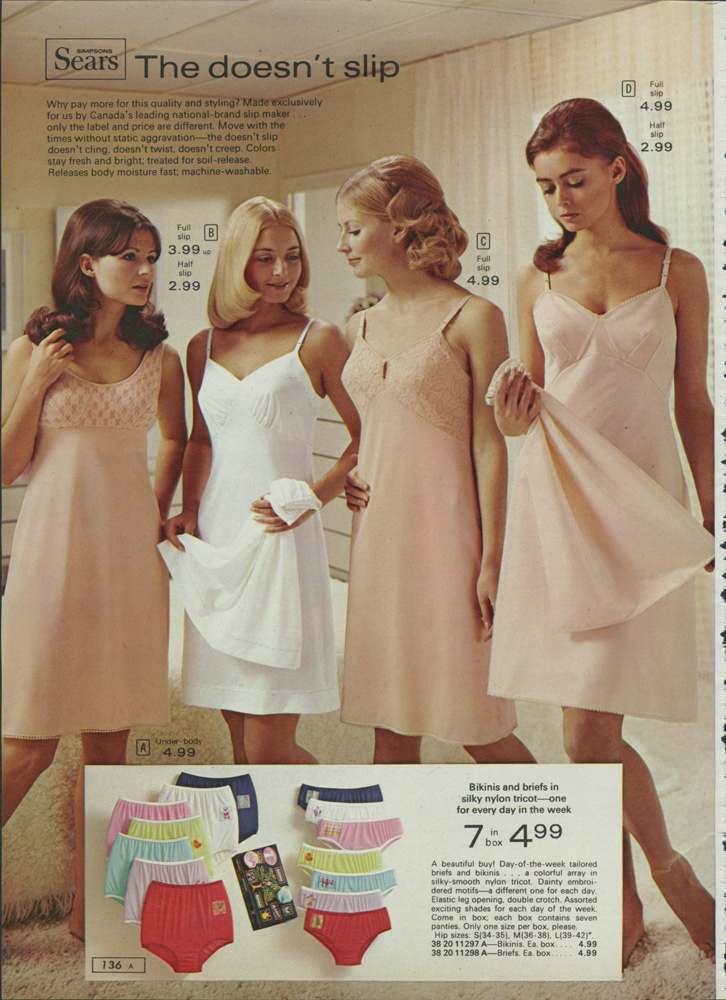
Catalog pages from 1972 have a particular way of selling modern life, mixing soft-focus glamour with hard facts like prices and fabric claims. Here, a Sears spread leans into reassurance—“The doesn’t slip”—while presenting everyday foundation pieces as the quiet scaffolding beneath the season’s louder looks. The copy and layout are a reminder that fall/winter fashion wasn’t only about coats, minis, and the era’s bold colors; it also depended on what was worn underneath.
Four models stand in a warm, wood-paneled interior, modeling simple slips in pale tones, from a crisp white to blush and beige, some with lace textures and delicate straps. Small lettered callouts and price points sit close to each garment, turning the scene into a shopable guide rather than pure fantasy. The styling—center-parted hair, smooth silhouettes, and a calm, poised mood—anchors the image firmly in early-1970s fashion culture.
Along the bottom, a neat grid of brightly colored briefs adds a pop-art splash of retail optimism, complete with a boxed offer and promotional language. Together, the slips and underwear tell a fuller story of 1972 women’s clothing: practicality packaged as progress, comfort marketed as confidence, and intimate apparel presented as a week-by-week routine. For anyone exploring vintage fashion history, this page is a useful snapshot of how mainstream catalogs translated runway-era shifts into wardrobe basics for everyday shoppers.