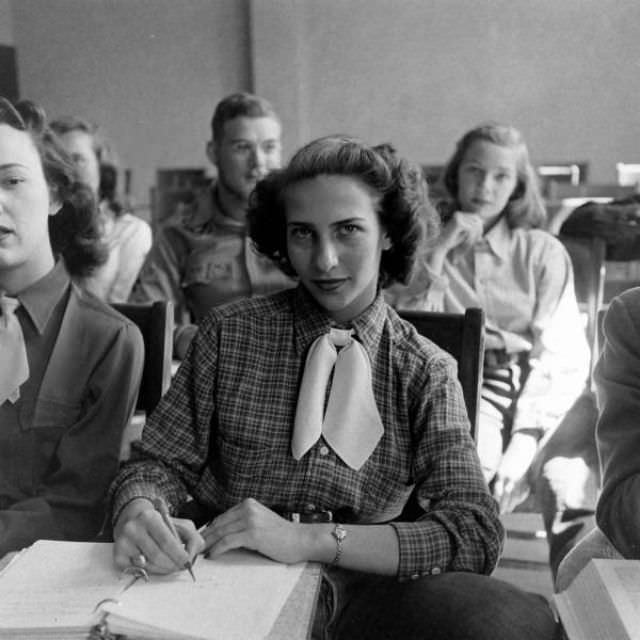
A steady, unguarded gaze meets the camera from a classroom desk, where a young woman in a checked blouse and wide neckerchief sits with pencil poised over paper. Her curled hair, neat tailoring, and practical accessories hint at how 1940s cowgirl style could travel easily from ranch work to town life—clean lines, sturdy fabrics, and a touch of flair that didn’t depend on Hollywood costume departments. Around her, other students lean back in their chairs, turning the scene into a slice of everyday America rather than a staged Western set.
Clothing tells its own story here: the scarf tied at the throat reads as both functional and fashionable, while the patterned shirt suggests durability without sacrificing polish. The look echoes the cowgirl aesthetic—ready for dust, wind, and long days—yet perfectly at home in an indoor setting where learning, ambition, and community take center stage. In this era, “Western” wasn’t only a screen fantasy; it was a cultural language woven into wardrobes, etiquette, and identity.
Beyond the Silver Screen explores that authentic 1940s American cowgirl fashion and culture, where practicality and pride often shared the same seam. The photo invites you to notice the small details—hair, fabric, posture, and the social atmosphere—that reveal how women balanced work, education, and self-presentation during a decade shaped by change. For readers searching for vintage Western style, women’s history, and real-life cowgirl life in the 1940s, this image offers a quietly powerful starting point.