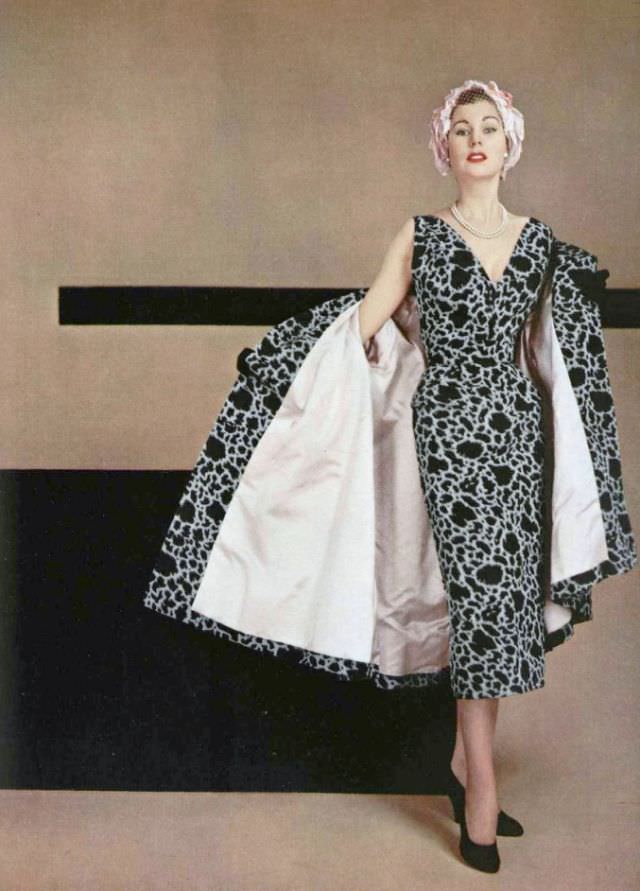
Stella stands poised in a sculptural cocktail sheath, its black-and-white silk ottoman pattern reading like ink on paper under studio lighting. The sleeveless, V-neck bodice tapers into a narrow, mid-calf skirt that emphasizes the clean, controlled silhouette associated with early 1950s couture. Pearls at the throat and a small head covering complete a polished evening look that feels both graphic and refined.
Draped open across her arms, the matching coat becomes the scene’s dramatic flourish, revealing a glossy pink satin lining that flashes against the monochrome exterior. The way the fabric falls suggests weight and structure—more architecture than wrap—while still inviting movement as she steps forward. Against a pared-back backdrop of horizontal bands, the ensemble’s contrasts—light and dark, matte and sheen, restraint and reveal—take center stage.
Jacques Fath’s design language comes through in the confident glamour: a disciplined line paired with theatrical detail, meant for cocktail hours, receptions, and the public performance of elegance. The photograph doubles as fashion history and cultural artifact, reflecting a moment when couture promoted complete looks—dress, coat, accessories, and attitude—rather than a single garment. For collectors and vintage style researchers, it offers a vivid reference point for 1953 eveningwear, textile choice, and the timeless appeal of black-and-white with a secret satin blush.