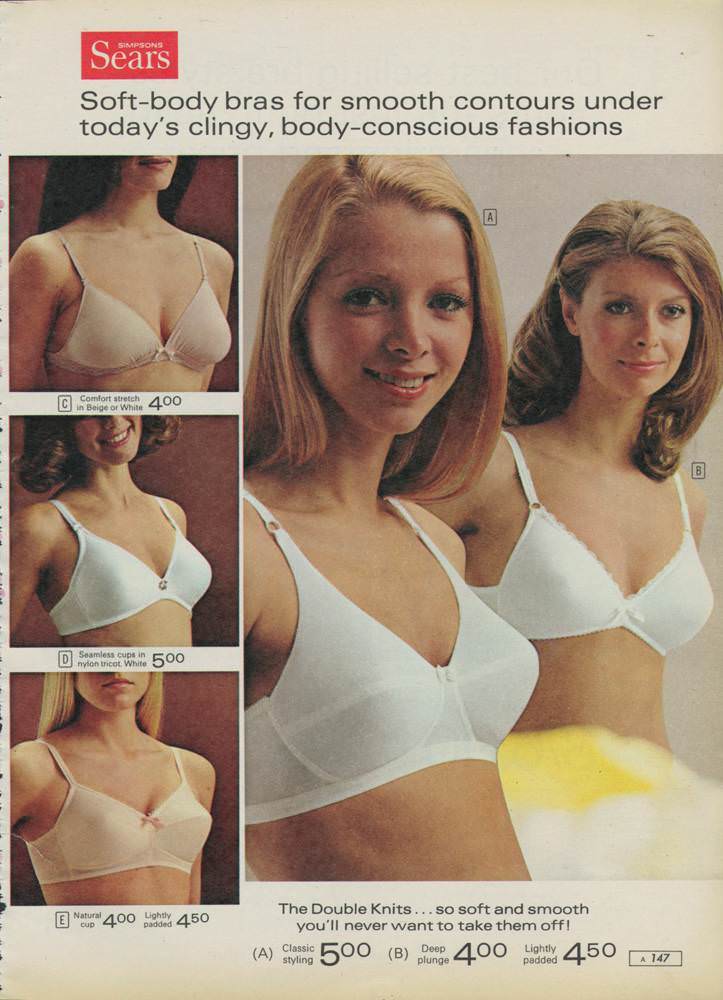
Sears and Simpsons branding at the top of this 1972 catalog page instantly places the viewer in the world of mainstream North American retail, where fashion was marketed as both modern and practical. The copy leans into the era’s “clingy, body-conscious fashions,” promising smooth contours and comfort—language that reveals how the early ’70s balanced liberation with new expectations about silhouette and fit. Even the clean, bright layout reads like a time capsule of print design, when department-store catalogs served as style guides as much as shopping tools.
Models in simple, lightly structured lingerie underscore a broader Fall/Winter wardrobe story hinted at in the post title: mini-skirts, slacks, and bold seasonal colors all depended on foundations that were meant to disappear under knits and synthetics. The emphasis on “soft-body” construction suggests a shift away from rigid shaping toward stretch and ease, aligning with the decade’s growing preference for movement-friendly clothing. Subtle details—thin straps, smooth cups, and minimal ornament—signal a streamlined look that paired well with the sleek lines popular in 1972.
For readers interested in fashion history and culture, this page offers more than product photography; it shows how everyday style was sold through reassurance, aspiration, and the promise of effortless confidence. Catalog fashion from the 1970s helps trace how trends traveled from runways into living rooms, especially for shoppers far from major boutiques. As part of a broader women’s fashion catalog snapshot, it complements the season’s headline looks—purple hues, shorter hemlines, and the rise of slacks—by spotlighting the underpinnings that made those outfits feel current.