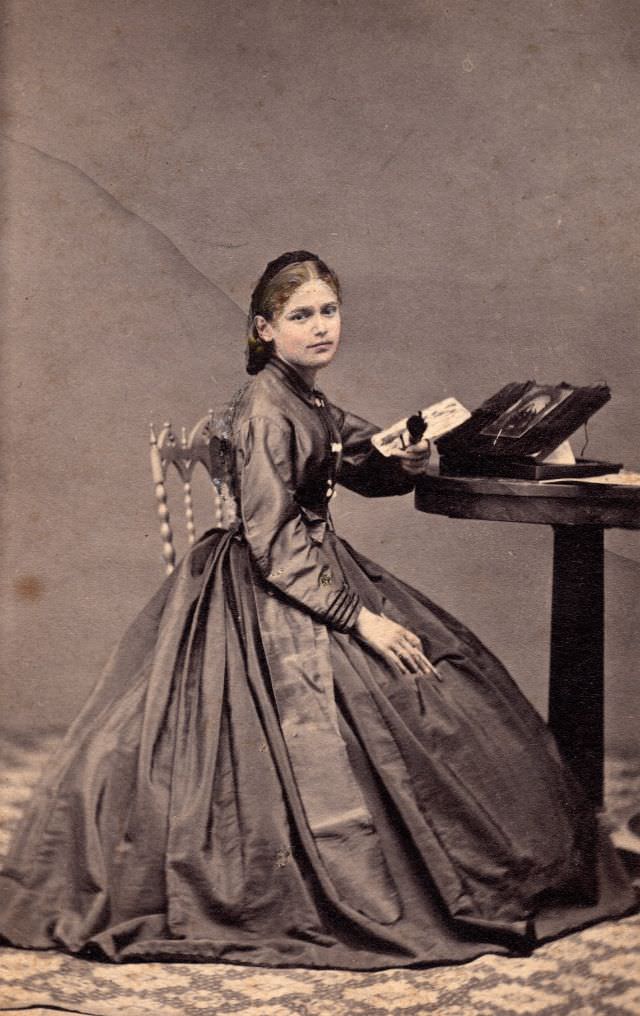
Poised beside a writing desk, a young Victorian girl turns toward the camera with an expression that feels both composed and curious. Her dress spreads in a full bell shape across the floor, the kind of carefully structured silhouette associated with mid-19th-century fashion. The studio setting is spare—plain backdrop, carved chair, and a patterned carpet—so the eye is drawn straight to the figure and the details of her clothing.
The gown’s fitted bodice and long sleeves suggest the era’s emphasis on modesty and neat tailoring, while the wide skirt hints at the fashionable support of the day, likely a crinoline or similarly stiffened understructure. Subtle trimming at the cuffs and the smooth sheen of the fabric add a sense of formality, as if this portrait was meant to mark a milestone in family life. Even her hairstyle, parted and drawn back, reflects the tidy, disciplined presentation expected of girls in Victorian society.
Small choices in pose and props speak to “Fashion & Culture” as much as to clothing: the pen and open writing slope gesture toward education, refinement, and domestic accomplishment. Portraits like this worked as visual records of status and upbringing, preserving not just a likeness but an ideal of girlhood shaped by the 1860s. For anyone researching Victorian girls fashion, this image offers a clear look at silhouette, construction, and the social meanings stitched into everyday elegance.