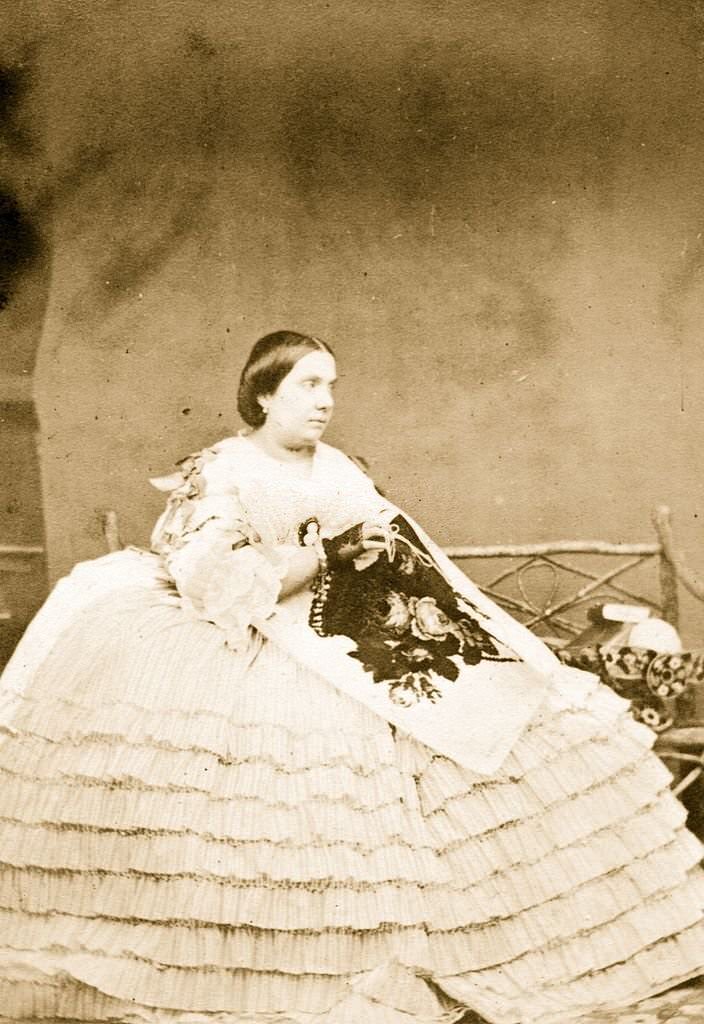
Seated in profile with a calm, attentive gaze, Isabella II of Spain is portrayed at needlework, her hands gathered around a richly patterned shawl mid-embroidery. The sepia tones soften the scene, while the plain studio backdrop keeps attention on the queen’s posture and the intimate domestic task—an image of royalty framed through quiet craftsmanship rather than ceremony.
Her dress is a striking example of 19th-century fashion, with the unmistakable breadth of a crinoline silhouette and tier upon tier of ruffled fabric cascading to the floor. The voluminous skirt, airy sleeves, and carefully arranged hair reflect the era’s ideals of femininity and display, where clothing signaled status as clearly as jewels or crowns.
Details around her hint at a staged portrait session—minimal furnishings, a bench, and the poised stillness required by early photography—yet the subject matter remains telling. By showing a queen engaged in embroidery, the photograph balances power with propriety, aligning monarchy with cultivated leisure and the moral language of the domestic arts. For researchers of Spanish royal history, Victorian-era portraiture, or crinoline fashion, it offers a vivid intersection of culture, clothing, and courtly self-presentation.