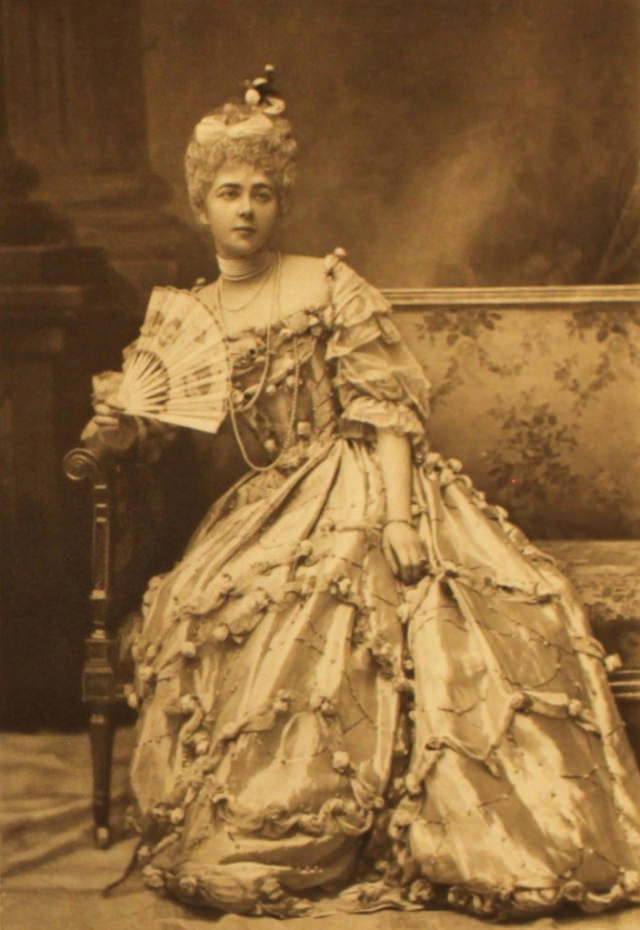
Seated in poised three-quarter profile, Mrs Elizabeth James appears in costume as the Archduchess Anne of Austria, her gaze turned slightly away as if caught between performance and portraiture. A lace-trimmed gown spreads outward in generous folds, the skirt heavily worked with rosettes and textured appliqué that read as deliberate theatre under studio lighting. In one hand she holds a folding fan, a period signal of elegance and controlled gesture, while layered necklaces and a fitted bodice add further emphasis to rank and refinement.
Rich details reward a closer look: puffed sleeves, intricate trimming, and a decorative headpiece perched above carefully dressed hair evoke the romanticized grandeur associated with continental courts. The setting—an upholstered bench, draped background, and the soft sepia tone—anchors the image in late-Victorian photographic style, where costume portraits often balanced historical fantasy with contemporary taste. The fan, jewelry, and structured silhouette work together to create a tableau meant to be read instantly as aristocratic, ceremonial, and unmistakably “old world.”
Linked to the famous Devonshire House Ball of 1897, this portrait reflects how elite society used masquerade to display craftsmanship, cultural knowledge, and status through dress. Such images have become invaluable to fashion history and social historians alike, preserving the fabrics, accessories, and styling choices that written accounts rarely capture with equal clarity. For anyone searching for historical costume photography, Victorian high-society masquerade fashion, or the visual culture of the Devonshire House Ball, Mrs Elizabeth James’s portrayal of Anne of Austria stands as a striking example of pageantry turned into enduring record.