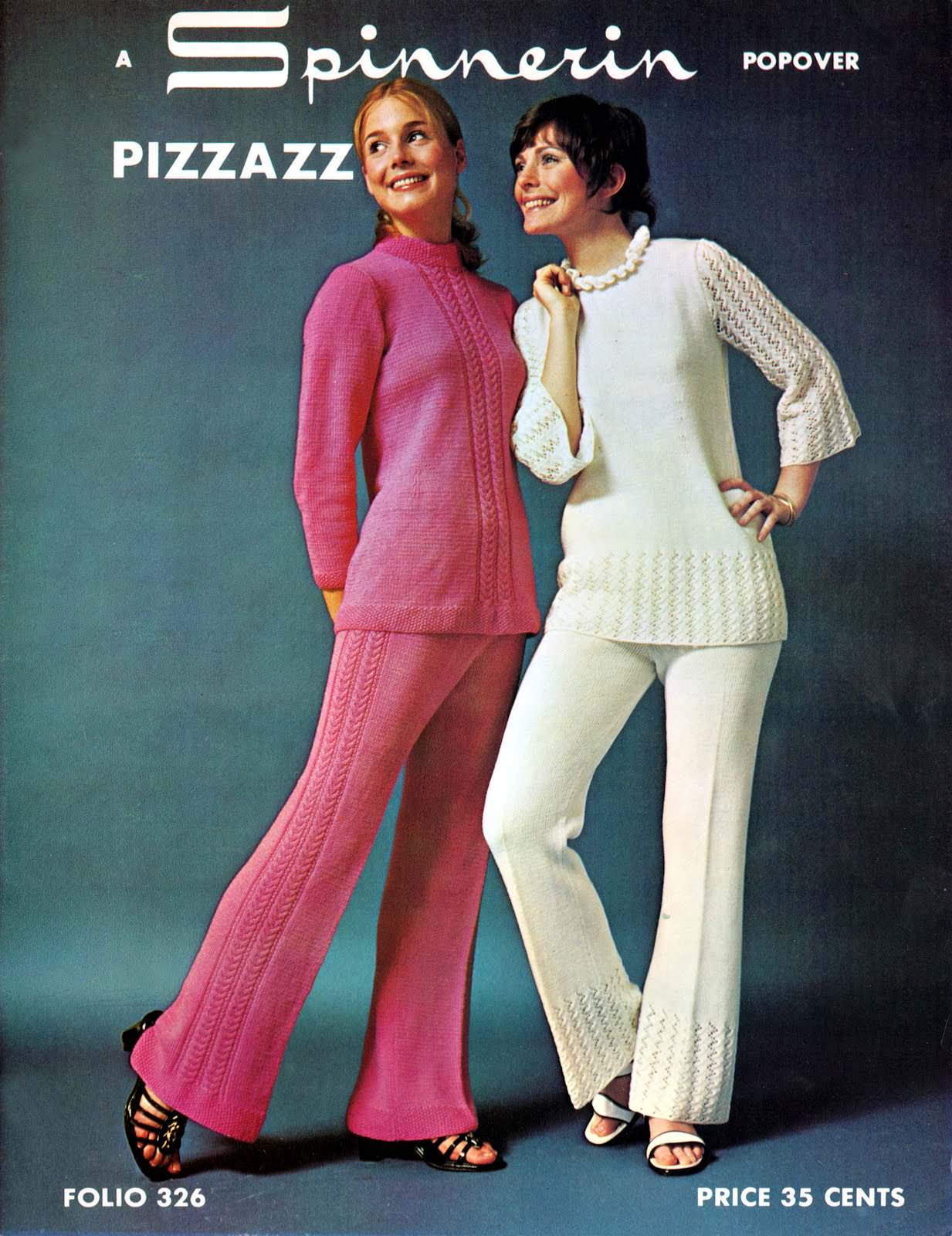
Bold lettering across the top—“Spinnerin,” with “PIZZAZZ” and “POPOVER” nearby—frames a confident fashion moment straight from a mid-century knitting magazine cover. Two smiling models lean toward one another against a simple studio backdrop, turning what could be a pattern advertisement into a lively snapshot of 1960s style attitudes. Even the small print at the bottom, including “FOLIO 326” and a “PRICE 35 CENTS,” hints at a time when home-sewn glamour was sold with the same punch as ready-to-wear.
Vivid color does much of the talking here: one look appears in saturated pink, the other in crisp white, each designed to show off the texture and structure of knitwear. The outfits read as coordinated sets—long, sleek tops paired with flared pants—accented by cable-like panels and openwork sleeves that spotlight handiwork and yarn craft. Heeled sandals and a chunky necklace complete the styling, balancing the softness of knitted fabric with the clean, modern lines associated with 1960s fashion.
What makes this Spinnerin cover especially useful for fashion and culture history is how it sells knitting as chic, youthful, and social rather than purely practical. The poses and expressions suggest mobility and ease, echoing the era’s appetite for streamlined silhouettes and mix-and-match wardrobes. For anyone searching vintage knitting patterns, 1960s knit dresses and sets, or retro magazine fashion, the image stands as a bright reminder of how craft publications helped translate runway energy into something makers could create at home.