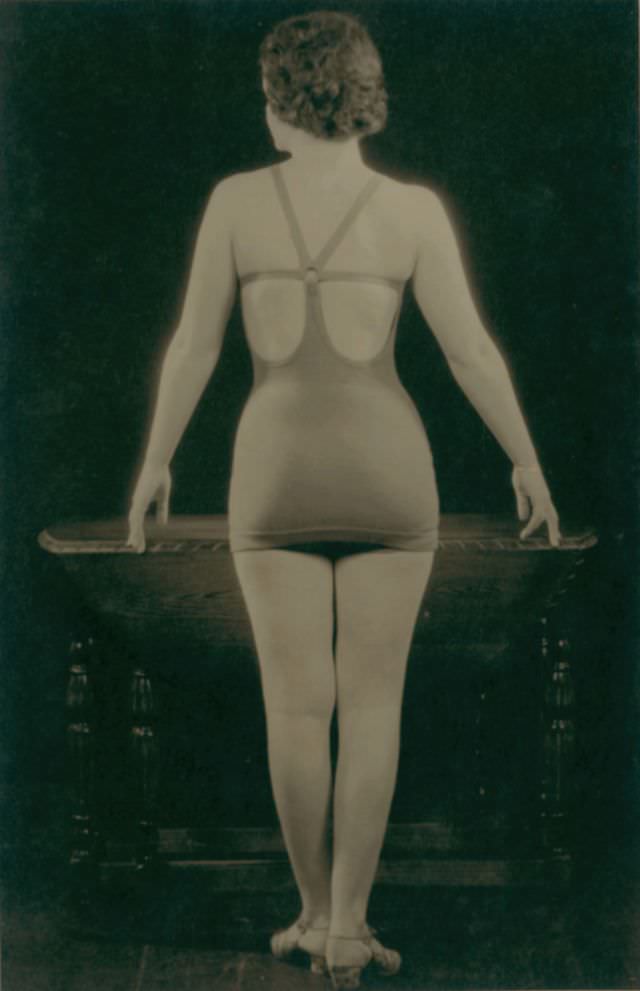
Against a dark studio backdrop, a swimsuit model stands with her back to the camera, hands resting on the edge of a wooden bench as if pausing between poses. The lighting skims across her shoulders and calves, turning the scene into a study of silhouette and posture rather than place. Her short, softly waved hair and the controlled, theatrical setting echo the glamour-forward visual language often used to sell 1930s fashion.
The one-piece swimwear itself is the star: a sleek, fitted suit with broad straps that cross and fasten at the center of the back, creating a supportive, architectural line. Cut high enough to lengthen the legs while still modest by modern standards, it reflects the era’s balancing act between athletic practicality and the growing appetite for figure-flattering resort style. Details like the smooth fabric and structured back emphasize how swimwear design was evolving beyond simple bathing costumes into curated, body-conscious apparel.
Tied to the title’s mention of Peter O’Sullivan, the photograph reads like a period fashion advertisement or catalog plate—designed to highlight construction, fit, and allure in a single, confident stance. It also offers a window into 1930s fashion and culture, when seaside leisure, Hollywood-inspired glamour, and new ideals of health and modernity reshaped what was acceptable to wear in public. For collectors and researchers of vintage swimwear, this image neatly captures the decade’s distinctive mix of restraint, innovation, and quiet sensuality.