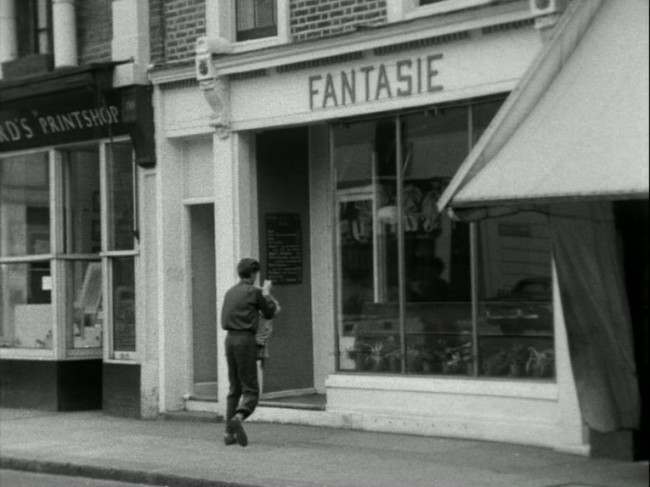
Under the simple, modern lettering of “FANTASIE,” a narrow doorway and wide front window announce a mid-century coffee bar ready for passing custom. The street is quiet in this film still, with a lone figure on the pavement turning toward the entrance, as if drawn by warmth, caffeine, and conversation. Brickwork and shopfront frames create a tidy urban rhythm, while the large glass pane invites a peek at the counter culture beginning to take shape behind it.
Seen as a screen grab from the Free Cinema film *Food For a Blush* (1959), the scene carries the texture of documentary observation: unposed, slightly soft, and alive to everyday detail. Reflections on the window hint at the traffic and movement outside, while the display inside suggests the practical business of snacks and hot drinks. Next door, a print shop sign anchors the Fantasie in a working commercial strip, where small businesses shared the same stretch of pavement and the same shifting postwar clientele.
Long before the mini-skirt became shorthand for swinging London, places like the Fantasie coffee bar helped build the social stage for new styles and attitudes to circulate. Coffee bars offered an alternative to pubs and parlours, attracting young people, artists, and shoppers who wanted modern music, modern talk, and a modern place to be seen. The result is an evocative snapshot of 1950s fashion and culture in the making—one storefront, one doorway, and one moment of city life caught on film.