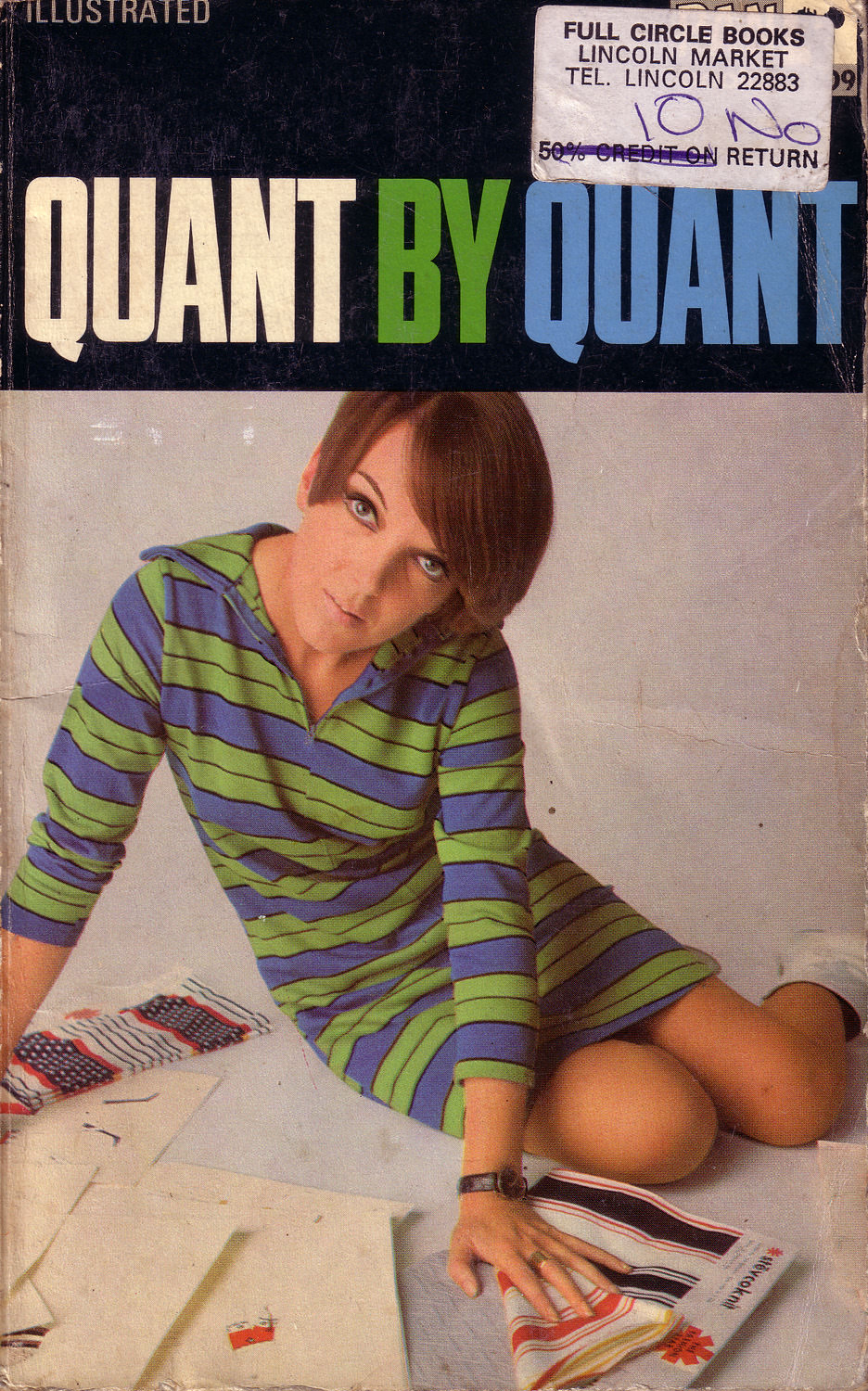
Bold block lettering—“QUANT BY QUANT”—crowns a worn magazine cover, its creases and scuffs hinting at how often it was handled, browsed, and passed along. Below the title, a poised young woman with a sharp, side-swept bob and graphic eye makeup reclines on a pale studio floor, meeting the camera with cool self-assurance. She wears a short, striped shift in vivid green and blue, the kind of streamlined silhouette that helped define swinging 1960s fashion.
On the ground around her lie papers and brightly patterned textiles, suggesting the workshop energy behind the look: designs drafted, fabrics tested, ideas shuffled into new combinations. The dress’s simple cut and punchy color-block stripes speak the visual language of youth culture—modern, playful, and made for movement rather than ceremony. Even the retail sticker in the corner, with its shop name and telephone number, quietly evokes the commercial reality of style: trends were printed, priced, and circulated as quickly as they were dreamed up.
Along King’s Road lore and the legend of Mary Quant, the mini-skirt’s “true origins” have long been argued in interviews, editorials, and fashion history debates. This cover doesn’t settle the question so much as show why the argument matters: a moment when a hemline became a symbol, and a new kind of street-led modernity began to outrun old rules. For anyone searching the roots of the mini-skirt trend, 1960s London style, or Mary Quant’s influence, the image offers a crisp snapshot of fashion as culture—designed, photographed, sold, and instantly copied.