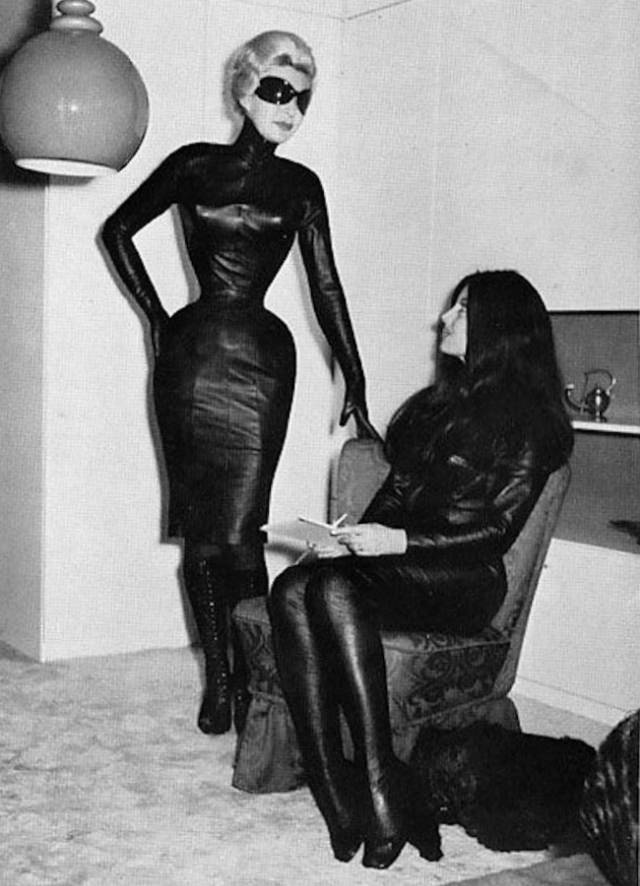
A statuesque figure in a skin-tight, glossy outfit stands with hands on hips, her silhouette exaggerated by an impossibly narrow waist and long, sharply tailored lines. Dark eyewear and slick, sculpted hair add to the air of performance, turning the body into a kind of fashion statement as much as a person. In the corner of the room, a hanging lamp and plain walls keep the setting spare, as if the photographer wanted nothing to distract from the startling proportions on display.
Beside her, another woman sits in an upholstered chair, dressed in similarly shiny, form-fitting clothing, looking up with a pen and notepad in hand like an interviewer, stylist, or documentarian. The contrast between the seated observer and the posed subject hints at a staged encounter—part publicity, part testimony—where “tiny waist” becomes a headline-ready spectacle. Even without visible text in the frame, the composition reads like a behind-the-scenes moment from a fashion and culture story built around shock, curiosity, and careful presentation.
Tied to the title’s promise of “The Unbelievable Cora Korsett Story,” the photograph leans into the long history of waist-shaping obsession, from corsetry myths to modern fetish aesthetics and media sensationalism. The sleek latex-like sheen, the high boots, and the controlled posture suggest a deliberate image crafted to provoke, sell, or challenge norms about beauty and bodily limits. For readers searching fashion history, extreme waist culture, and the social fascination with the engineered silhouette, the scene offers a vivid window into how style can become both armor and advertisement.