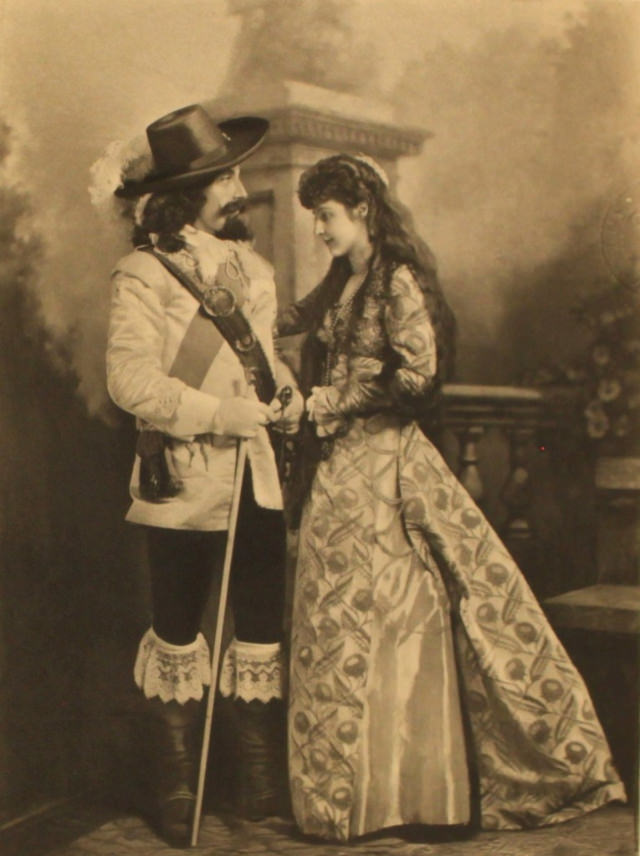
Velvet, lace, and a carefully staged glance set the tone as Lord Charles Montagu appears in the guise of Charles I, dressed in a broad-brimmed hat with a sweeping feather and a richly detailed doublet. A sash and medallion cut across his chest, while tall boots and ornate garters anchor the outfit in a romanticized vision of Stuart-era court dress. He steadies a slender cane, the pose both theatrical and self-assured, as if stepping out of a painted portrait and into the camera’s soft light.
Beside him, Lady Chelsea plays an Italian flower girl, her costume built around a lustrous patterned gown with an exaggerated train that spills across the floor in heavy folds. Dark curls frame her face and fall over her shoulders, and the fabric’s bold motifs read clearly even through the warm, sepia tones. The two figures lean toward one another with the intimacy of a staged tableau, turning costume into character and conversation into performance.
Behind their finery sits a studio-like backdrop—suggestive architecture, blurred edges, and a balustrade that hints at grandeur without pinning the scene to a specific place. Such photographs, tied to the Devonshire House Ball of 1897, reveal how late-Victorian high society used fancy dress as cultural spectacle, borrowing from monarchy, folklore, and “continental” types to craft an evening of pageantry. For anyone exploring Victorian costume history, aristocratic masquerades, or the visual culture of elite London gatherings, this portrait distills the era’s fascination with rank, romance, and carefully curated identity.