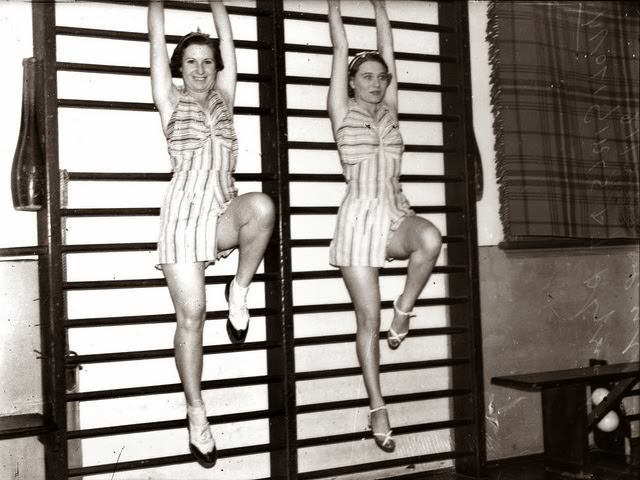
Gymnasium wall bars frame two Tivoli girls mid-routine in Brisbane, 1935, their arms stretched high and knees lifted in a poised, rhythmic hold. The striped practice outfits read as both functional and stage-ready, hinting at the streamlined silhouettes and playful patterns that defined 1930s Australian fashion. Even in rehearsal, the performers’ smiles and confident posture suggest the showmanship audiences expected from theatre revues.
Behind the choreography sits a quieter story of discipline and modernity, where dance training borrowed from physical culture as much as it did from the music hall. The sturdy apparatus, plain room, and practical footwear point to the work hidden beneath glamour—hours of repetition that turned everyday movement into spectacle. For historians of entertainment, such rehearsal scenes offer rare insight into how performers prepared away from the footlights.
As part of a broader look at Australian style between beachwear and ballroom polish, this image anchors fashion in motion, not just in posed portraits. It also adds texture to Brisbane’s cultural life in the interwar years, when touring shows and local venues helped shape popular taste. Readers searching for Tivoli theatre history, 1930s dance practice, or Brisbane cultural heritage will find a vivid snapshot of performance culture in the making.