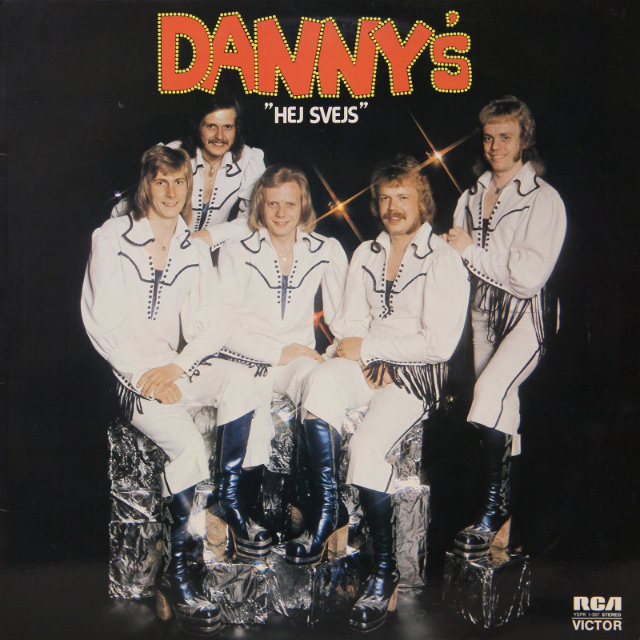
Bold lettering announces “DANNY’S” above the phrase “Hej Svejs,” framing a studio-staged band portrait that leans hard into showmanship. Five Swedish men pose in coordinated white outfits against a dark backdrop, the lighting punctuated by star-like flares that hint at stage glamour even in a still image. The record label mark in the corner reinforces that this is album-cover design meant to sell a sound as much as a look.
Costuming does the heavy lifting: matching white suits with dark piping and decorative studs, wide collars, and theatrical fringed accents create a uniform that reads part cowboy, part glam, part variety-show. High, glossy boots—some in deep blue—add height and swagger, while the metallic, foil-wrapped platforms beneath them catch the light like improvised spotlit risers. Hair is neatly styled in the era’s longer cuts, with moustaches on a couple of members signaling a confident, slightly roguish masculinity that was popular in European pop imagery.
What makes the cover memorable is its blend of camaraderie and performance, with relaxed smiles and angled stances suggesting an approachable group packaged in daring fashion. It’s a vivid example of how Scandinavian pop and dance bands used coordinated wardrobes to project identity, unity, and modern flair, turning clothing into branding. For collectors and researchers of vintage album covers, Swedish music history, and men’s retro fashion, the image offers a compact lesson in how style and sound were marketed together.