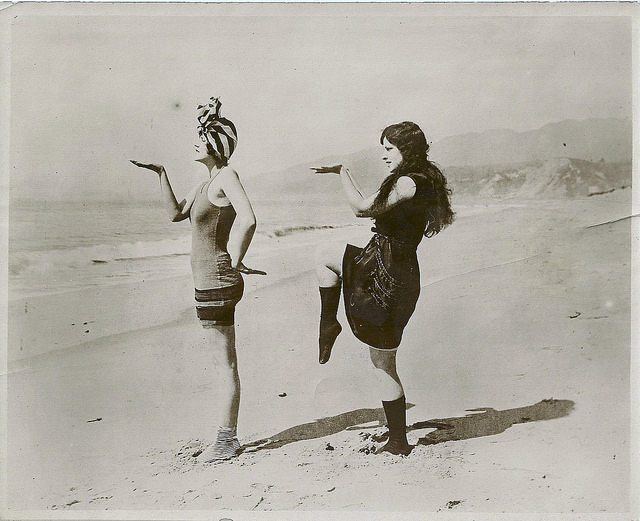
Along a wide, windswept shoreline, two women pose with playful confidence, their silhouettes sharply outlined against sea and sky. One stands in a fitted, sleeveless bathing suit with a snug cap or wrapped head covering, while the other wears a darker, looser outfit that reads like a modest beach dress or cover-up, paired with sturdy stockings. Their raised hands and lifted leg suggest a lighthearted routine—part dance step, part comedic tableau—capturing the performative side of early beach culture.
Clothing here tells the deeper story: early 1900s swimwear often balanced practicality with the era’s expectations of decorum, leading to layered looks and heavier fabrics that clung differently when wet. The contrast between a more streamlined suit and a fuller, draped garment hints at a period of transition, when women’s swimsuits were gradually shifting toward greater mobility and simpler lines. Even without specific labels, the cut, coverage, and accessories speak to changing ideas about sport, leisure, and what was considered “appropriate” in public.
Fashion and culture meet in the sand, where recreation became a stage for modern identity, advertising, and social commentary. This photograph invites a closer look at how women negotiated freedom and constraint—choosing garments that allowed them to move, swim, and be seen, while still navigating the scrutiny that surrounded beachwear. For anyone exploring the history of women’s swimsuits, early bathing beauties, or vintage seaside photography, it’s a vivid reminder that style evolution is never just about fabric—it’s about the world that demanded it.