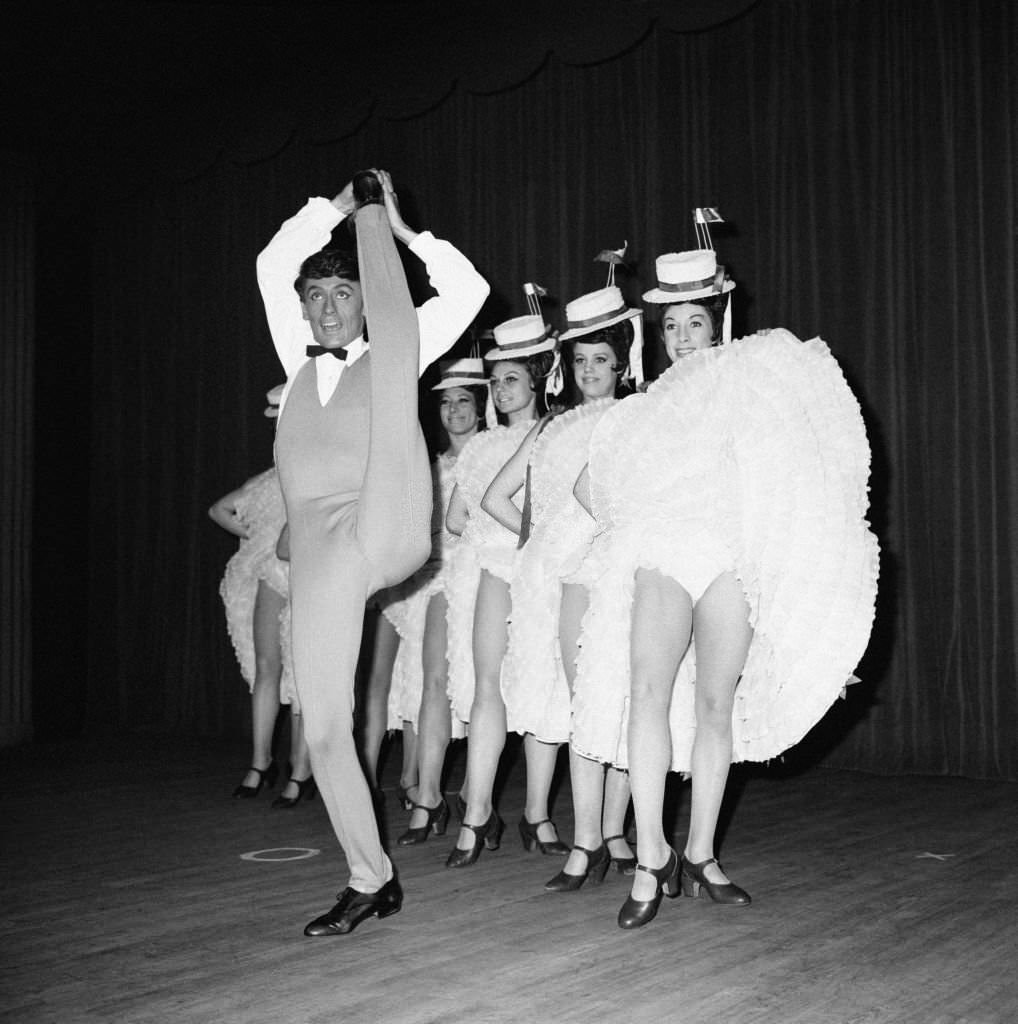
A razor-straight high kick freezes midair as star dancer Jean-Pierre Charnas holds his leg above his head, spotlighting the athletic precision that made the cancan a Parisian sensation. Behind him, a neat line of dancers forms a shimmering backdrop of ruffled skirts and matching boater hats, their smiles and poised stances suggesting the beat is still driving forward. The stage curtain and bare floor keep attention on bodies in motion, turning a single instant into a performance poster in miniature.
Costume details carry the flavor of a classic Moulin Rouge revue: crisp bow tie and fitted vest in front, then a chorus of white petticoats fanned like feathers, ankles braced in dark heels ready for the next sequence. The choreography reads as carefully drilled spectacle—legs, hems, and hats aligned—yet it also feels playful, the wink-and-dazzle style audiences expect from cancan dancers. Even without hearing the orchestra, the photograph suggests percussion, laughter, and the snap of fabric as skirts whip through the air.
Taken during the new revue “Frou-frou” at the Moulin Rouge in Paris in 1964, the scene evokes an era when nightclub entertainment fused tradition with modern showmanship. The cancan’s reputation as high-energy, physically demanding dance is written into the strain of the pose and the disciplined formation behind it. For anyone searching Paris nightlife history, Moulin Rouge dancers, or 1960s French culture, this image offers a vivid glimpse of how the legendary stage kept its glamour alive through sheer technique and coordinated flair.