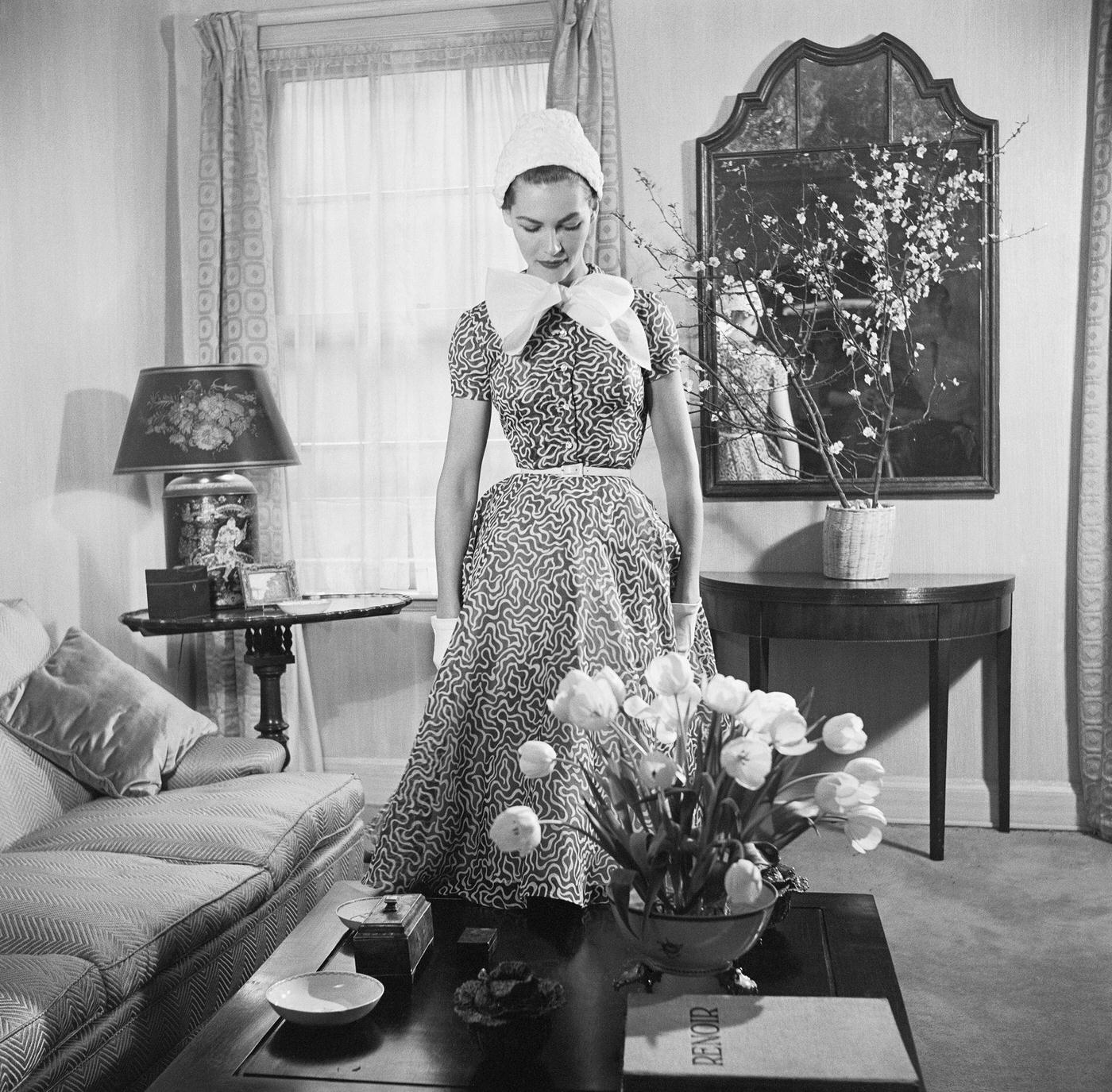
Georgia Hamilton stands in a softly lit sitting room, her gaze lowered as if caught mid-thought, turning a fashion pose into a moment of quiet narrative. The domestic backdrop—curtained window, upholstered sofa, and a low coffee table arranged with a bowl and small cases—frames her as both glamorous and approachable. Even in monochrome, the scene reads as carefully staged editorial fashion, balancing elegance with everyday comfort.
The slate gray and white day dress by Carolyn Modes is defined by a lively, swirling pattern that animates the fitted bodice and full skirt. A narrow belt pinches the waist, emphasizing the classic silhouette, while the oversized white bow at the neckline delivers dramatic contrast and a touch of playful formality. White gloves and a textured headpiece complete the look, signaling a polished, mid-century sensibility suited to daytime social rituals.
Behind her, a mirror and a vase of flowering branches echo the outfit’s graphic rhythm, while a bowl of tulips on the table adds a layered still-life effect typical of vintage fashion photography. The composition sells more than a garment; it sells a lifestyle of cultured interiors, refined accessories, and poised femininity. For readers searching fashion history, Georgia Hamilton, or Carolyn Modes, the image offers a crisp glimpse of how style and setting worked together to define an era’s idea of “day dress” sophistication.