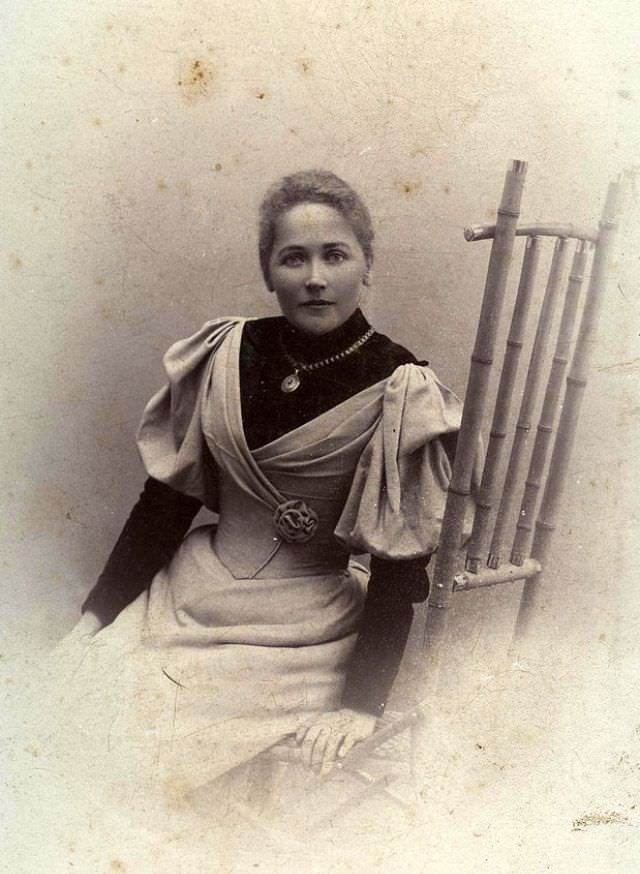
A seated Victorian woman turns toward the camera with a composed, direct gaze, her posture carefully arranged beside a simple wooden chair. The studio backdrop is plain and softly mottled with age, drawing attention to the crisp contrast between her dark high-neck bodice and the lighter outer layers draped across her front. Even without seeing the undergarment itself, the silhouette suggests the structured foundation of late 19th-century fashion: a cinched waist and smooth lines that corsetry was designed to create.
Puffed sleeves and layered fabric give the dress its fashionable volume, while a small pendant at the throat and a decorative accent at the waist add refinement without excess. The fitted midsection reads as intentional and engineered, hinting at the boning and lacing beneath that shaped everyday dress in the Victorian era. Details like the clean neckline, the tailored seams, and the calm, formal pose echo the period’s ideals of respectability and controlled elegance.
Beyond the aesthetics, the photograph offers a window into fashion and culture when the corset was widely treated as an indispensable undergarment—part support, part symbol, and part social expectation. The gentle wear and fading in the print lend authenticity, reminding viewers that these were real garments worn for long hours, not merely costumes. For anyone researching Victorian clothing, women’s history, or the evolution of lingerie and corsetry, this portrait distills the era’s distinctive balance of beauty, discipline, and display.