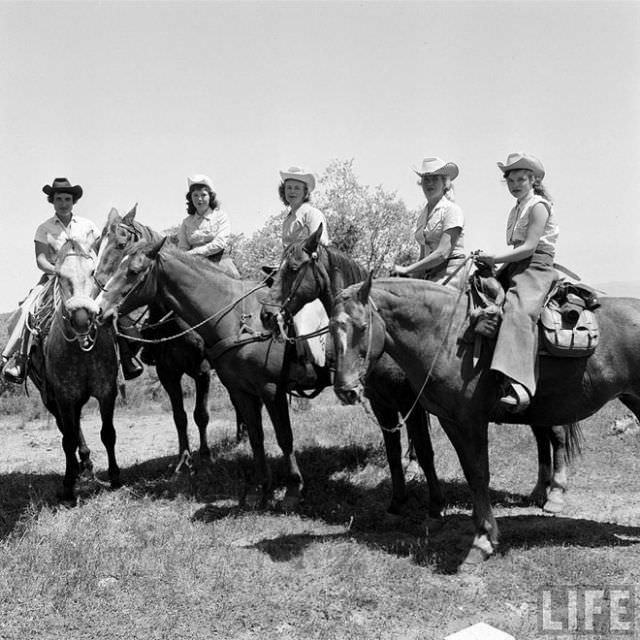
Sunlit open range and a calm line of riders set the tone here: several women in brimmed Western hats sit confidently in their saddles, reins loose, horses standing patient beneath them. The clothing is practical yet unmistakably “cowgirl”—buttoned shirts, sturdy jeans or riding trousers, and gear that reads as working tack rather than movie-costume sparkle. In one frame, the everyday poise of these riders hints at a world where competence mattered more than posing, even when a camera was present.
Away from the silver-screen myth of perfectly pressed outfits and choreographed heroics, the 1940s cowgirl aesthetic was built for movement, dust, and long hours outside. Details like the fit of the shirts, the no-nonsense silhouettes, and the functional saddles point to a culture shaped by ranch routines, horse sense, and community rides. The result is fashion as lived experience—clothes that signaled identity while meeting the demands of real work and real weather.
Seen today, this historical photo invites a closer look at American cowgirl fashion and culture as something layered: part tradition, part adaptation, and always rooted in skill. It also offers visual cues for anyone researching Western wear history—how hats were worn, how riders sat, how gear was arranged, and how style and utility intertwined. For readers exploring 1940s Americana, women’s Western clothing, or the authentic life behind cowboy cinema, the scene provides a grounded, memorable reference point.