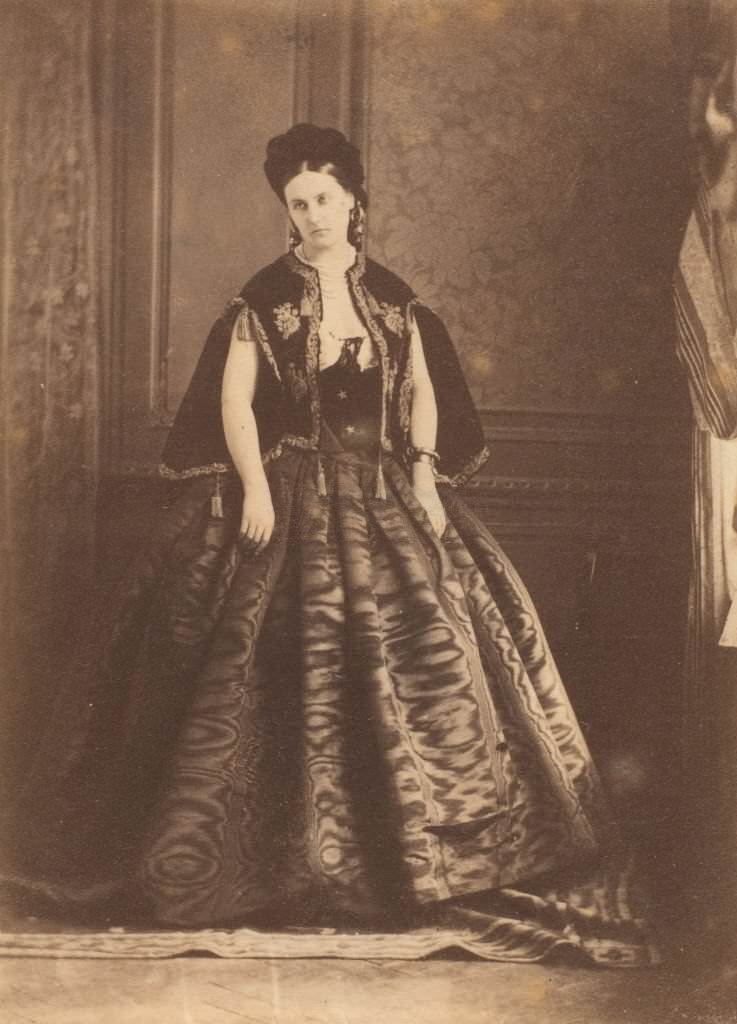
Moir’s dress from the 1860s is presented as a full-length studio portrait, with the sitter standing against a softly patterned interior backdrop. The gown’s silhouette immediately signals the crinoline era: a dramatically widened skirt that sweeps outward in a bell shape, its glossy fabric catching light in rippling bands. A composed, almost solemn expression and a steady stance give the scene the formal, deliberate air typical of mid-19th-century photography.
Attention is drawn to the rich contrast between the fitted bodice and the expansive skirt, a hallmark of 1860s women’s fashion. Decorative trim and embroidery frame the neckline and front panel, while a short cape-like overskirt or mantle adds weight and texture over the shoulders and upper arms. The sheen of the textile suggests a luxurious material chosen to emphasize status and taste, amplified by the controlled lighting and the careful posing demanded by early photographic studios.
Beyond its elegance, the image speaks to fashion as culture: crinolines were not merely garments but engineered structures that shaped how women moved through rooms, doorways, and social rituals. The dress becomes architecture in cloth, projecting presence while also hinting at the constraints and expectations placed on women’s bodies in the 19th century. As a historical fashion photograph, it offers a vivid reference for researchers and enthusiasts interested in Victorian dress, crinoline construction, and the visual language of refinement in the 1860s.